Trump’s Federal Cuts Hit Grand Junction and Mesa County: A Community Faces Uncertainty with Resilience
Story By: Stone Quinn, Sports Editor
Photos By: Westin Winter
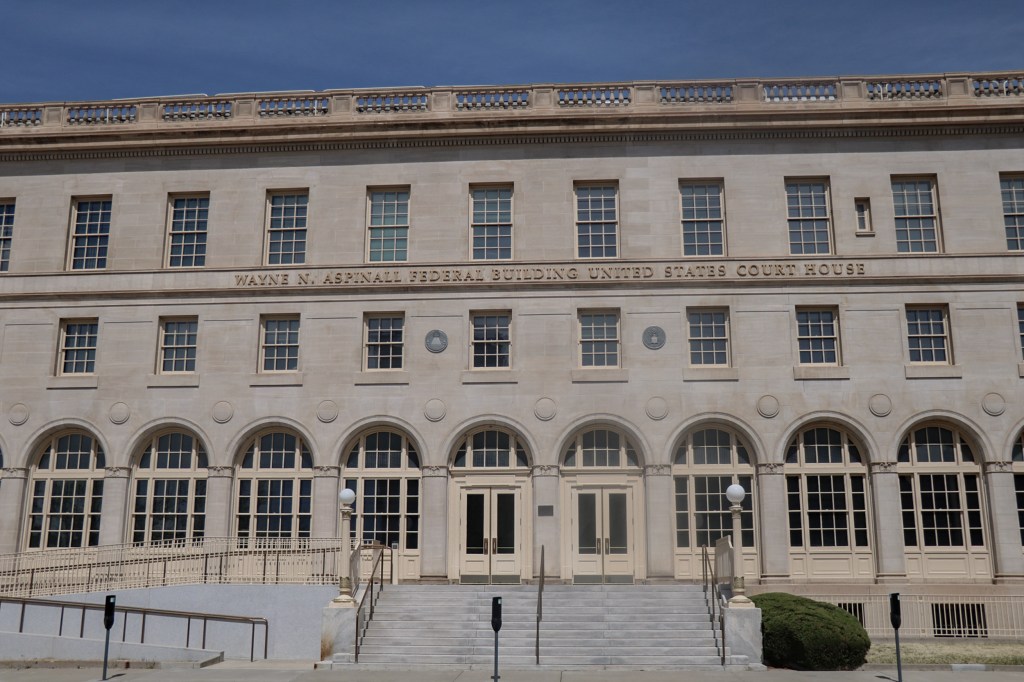
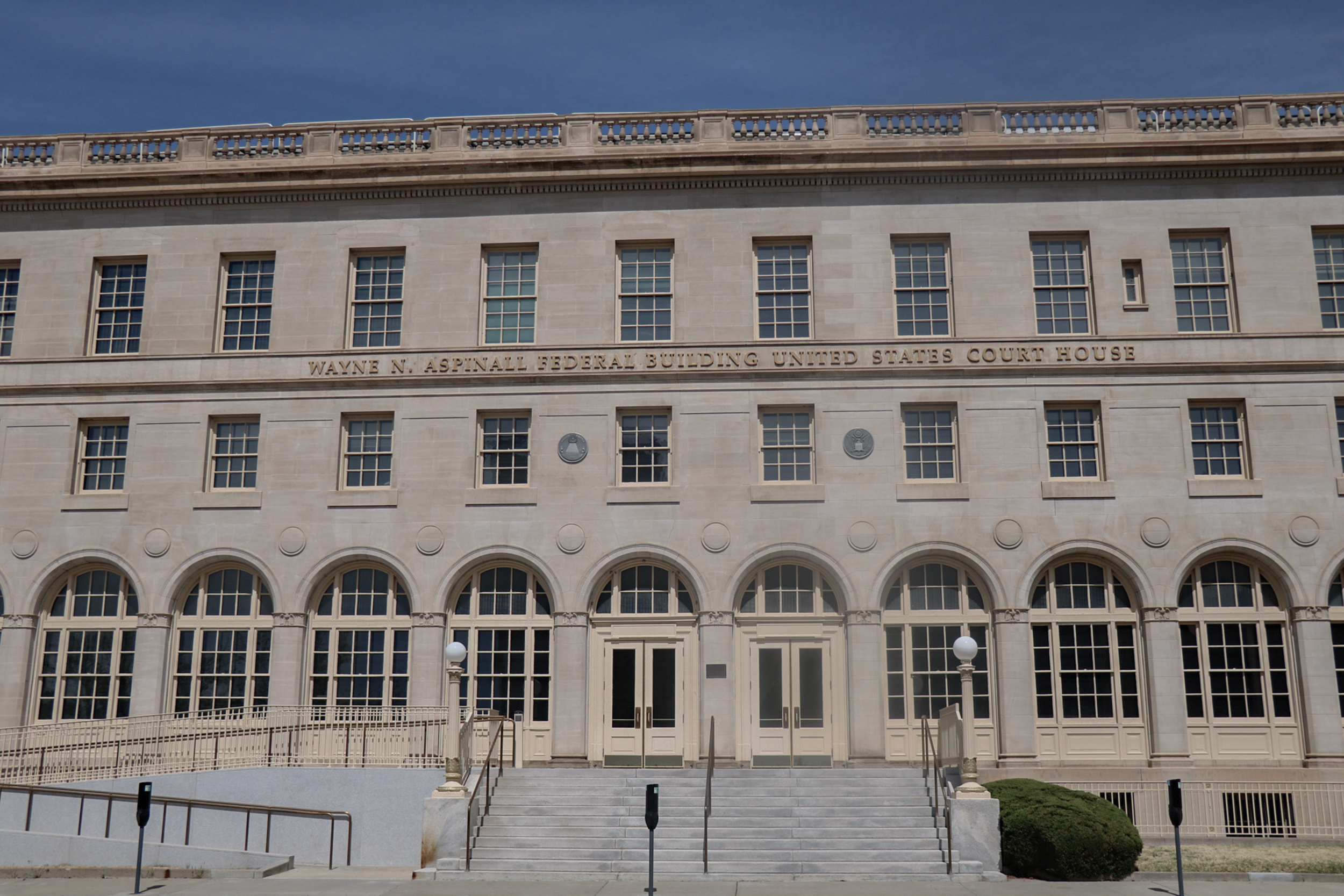
The Grand Junction Federal Court House sits on 400 Rood Ave, waiting for anyone to enter (W.Winter April 3, 2025)
Grand Junction, Colorado has long been known for its culture of persistence, resilience, and a deep-rooted desire to improve. Now, as the country adjusts to new federal leadership, the community once again finds itself facing uncertainty. But as always, Grand Junction leans into its values — knowing that hard work will define its future.
On January 28, President Donald Trump sent an email to all federal employees announcing large-scale layoffs and policy changes. These decisions not only signaled thousands of job losses but also pointed to the permanent elimination of some federal positions — all in the name of reducing government spending.
At the national level, the impact has been swift. According to a New York Times article updated on May 4, approximately 58,000 federal jobs have already been cut, and 76,000 employees have accepted buyouts. This comes just four months after the policy’s rollout, showing the immediate consequences of the federal downsizing.
Here in Colorado, the ripple effects are already being felt. While the exact number of laid-off or accepted buyouts in the state are unknown, the Colorado Department of Labor reports that 759 federal employees have filed for unemployment since January, showing some impact.

At a town hall meeting held in Grand Junction on April 14, Colorado Senator John Hickenlooper addressed the cuts:
“Most Americans think the federal government should be smaller. I think the federal government should be smaller, but not like this,” said Hickenlooper. “You know this thing where we’re just using a sledgehammer to institutions that have been built up over decades and have value right? Again, they should be smaller. They should be improved. They could do better.”
While the nation and state wrestle with the impact, Mesa County itself is dealing with both funding concerns and potential service delays. Mesa County Commissioner Cody Davis shared his perspective on the local implications:
“There’s the layoffs, okay, and then there’s the funding because, because we’re aggressive about going after federal funding for like roads, infrastructure projects, things like that,” said Davis. “One could say that the employee layoffs are affecting us because maybe those grants processing grant requests aren’t getting through as fast.”
While staffing reductions haven’t drastically affected Grand Junctions local government, Davis emphasized that decreased federal funding has a more noticeable impact — particularly in departments that depend on state and federal support.
“There’s several programs that are federally and state funded here in Mesa County. So a lot of the stuff that we do with the Department of Human Services, basically welfare, yes, whether it’s infant and women, women and infant children, you know, whether it’s just basic welfare, we all that stuff, it gets funneled through Mesa County. So someone’s on welfare in Mesa County, it’s they’re going through the Department of Human Services, which is us. And so those grant programs are being affected. So at the end of the day, those will affect our community, the amount of dollars available.”
This means fewer dollars coming into Mesa County for essential services, and that affects residents directly — especially those who rely on welfare programs or health assistance.
Davis also pointed out that the financial strain isn’t limited to federal actions:
“The State Government has, you know, beginning year, they had a billion dollar shortfall, and so they have been cutting a lot of state programs as well.”
So, while federal cuts are at the forefront, the state’s own budget shortfalls are worsening the situation. These dual challenges are squeezing resources for both government operations and community services.
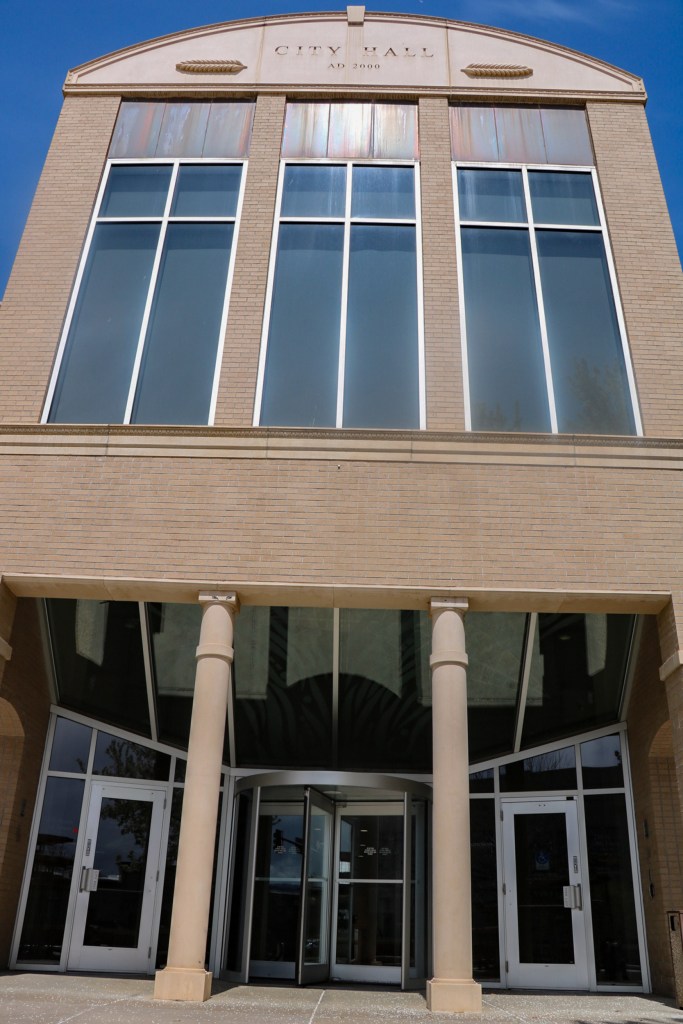
The City Hall building of Grand Junction was built in 1885 and had continued to served the community. (W.Winter April 3, 2025)
When asked about how the public is responding, Davis reflected on recent shifts in public expectations since the pandemic:
“During COVID that those welfare payments went up quite a bit because people weren’t able to work. And I think people got used to getting more money, you know, yeah, no locally.”
The temporary increases during COVID created a baseline that has now been abruptly cut — making the changes more painful for some families.
Yet despite the pressure, Davis remains confident in the county’s ability to adapt and push through:
“But you know what? Mesa County has always made it through. We’ve always adjust our budget. We, we we have to have a balanced budget. So no matter what, at the end of the day, we’re going to have to balance our expenditures with our revenues. And it may hurt, maybe some pain, but we always make it through. We’ll do our best to make sure to minimize the pain to our community as best we can.”
This optimism is echoed by some in the community, like Jacinth Quinn, a federal employee working at the Grand Junction Veterans Affairs office:
“You know there is a lot confusion and stuff. But the VA mission never changes. Policies might change, staff might change, but the VA mission never changes.”
For Quinn and others like her, the mission remains the same — even in a time of instability. Grand Junction may be facing difficult times, but the spirit of its people hasn’t wavered. The community has accepted the challenge and remains committed to serving its residents, no matter what lies ahead.

 blockpartygj.net