Does your recycling actually get recycled?
Story By: Makenna Livingston, In the Dirt Editor
Photos By: Emmerson Rezoski and Courtney Havel
Digging through my recycling and garbage bins like a madwoman — neon orange gloves on, the smell of alcohol permeating the air — pulling out crinkled plastic bottles, separating glass from tin cans, rinsing and washing. Slapping a copy of Grand Junction’s recycling guidelines on the fridge, maybe then I wouldn’t pull out my hair anymore when my roommates tossed half-eaten, moldy bagels into the blue bin. I started to wonder: Was any of my effort worth it?
The Chasm of Distrust
Across the country, the chasm of distrust between the recycling industry and the community continues to deepen. In 2018, China’s National Sword policy banned recyclables with more than a 0.5% contamination rate. In Chicago, less than 9% of recyclables were actually recycled. In Philadelphia, 50% of recycling was being incinerated. In Southeast Asia, mountains of unmoving plastics sit.
With all of this in mind, the skepticism sweeping the nation is not without reason. Some say recycling is for profit. Some say it’s just for show. Others believe it all ends up in the landfill. So what about here? I set out to investigate what really happens to recycling in Grand Junction, and what I found surprised me.
Sorting It All Out
After reaching out to several sources, I was able to get in contact with two industry representatives: Jennifer Richardson, Solid Waste and Sustainability Division director at the Mesa County Landfill, and Angela French, Interim Recycling and Waste Reduction Supervisor for the City of Grand Junction.
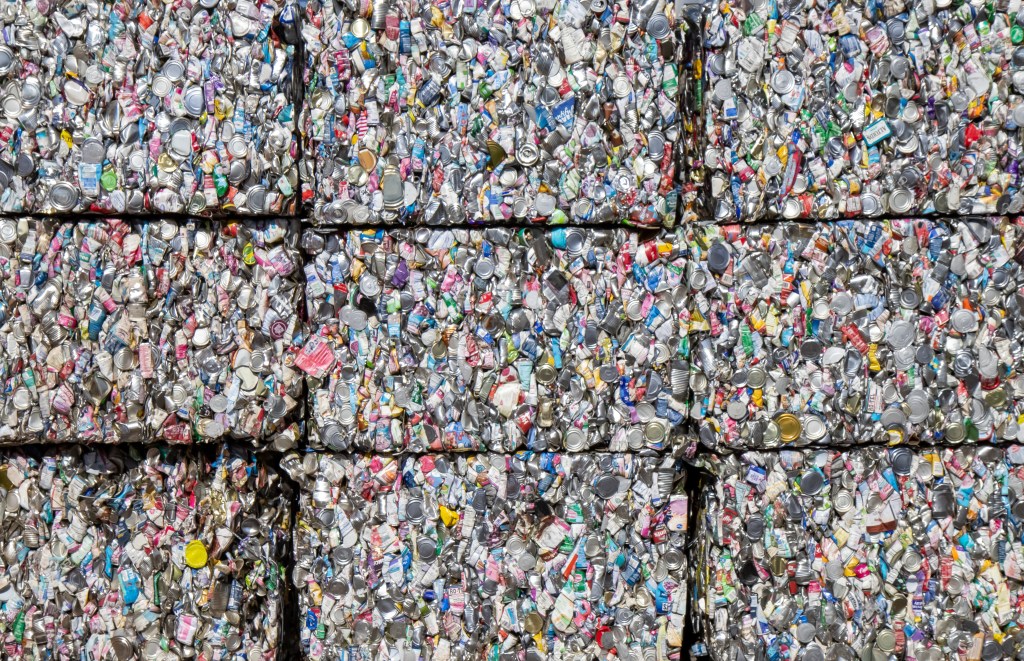
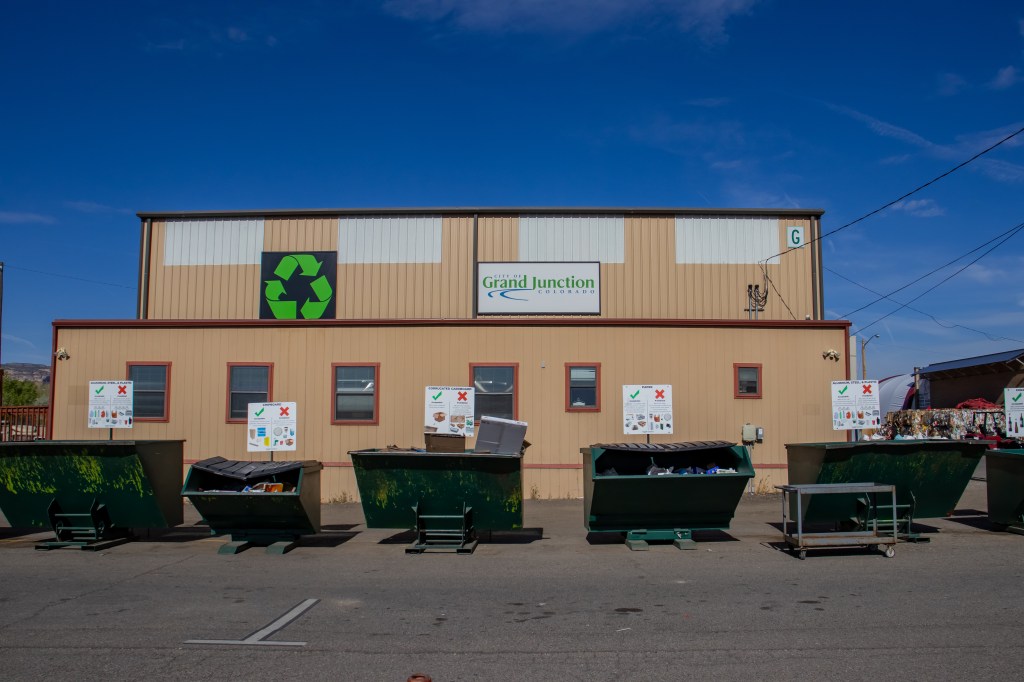
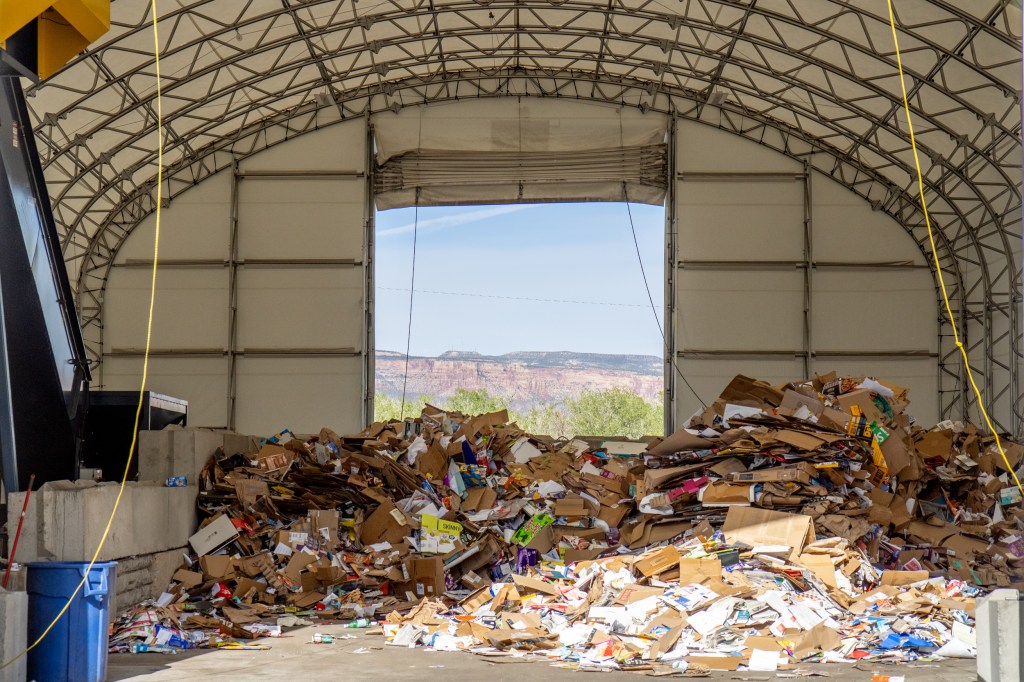
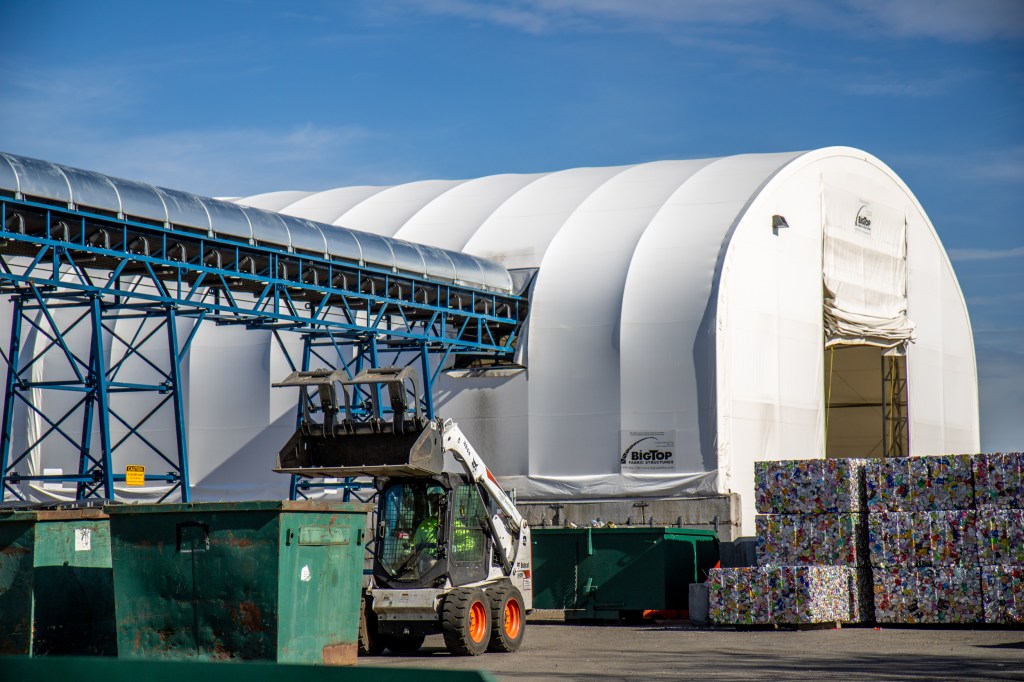
Pulling back the curtains, I wanted to understand where recycling was going and how the system worked. Speaking with Richardson, I learned the process starts at the curb. Then, once picked up, it is sent to a materials recovery facility, or MRF. The MRF here is located at the City of Grand Junction Recycling Division — a relatively small facility where recycling is sorted by hand, alongside machinery such as magnets to capture metal tins to assist in the process.
Once sorted into primary material groups such as glass, paper, and plastic, the recycling is sent to a processor or mill. To my surprise, both Richardson and French made it clear that none of the recycling is shipped overseas; instead, it is sent to facilities within the United States. Finally, the processors or mills sell the material to an end-user.
Partnering With Purpose
“[We] work directly with brokers and mills, and our products do go to mills in the United States, and we make sure we know where our material is going,” Angela French said.
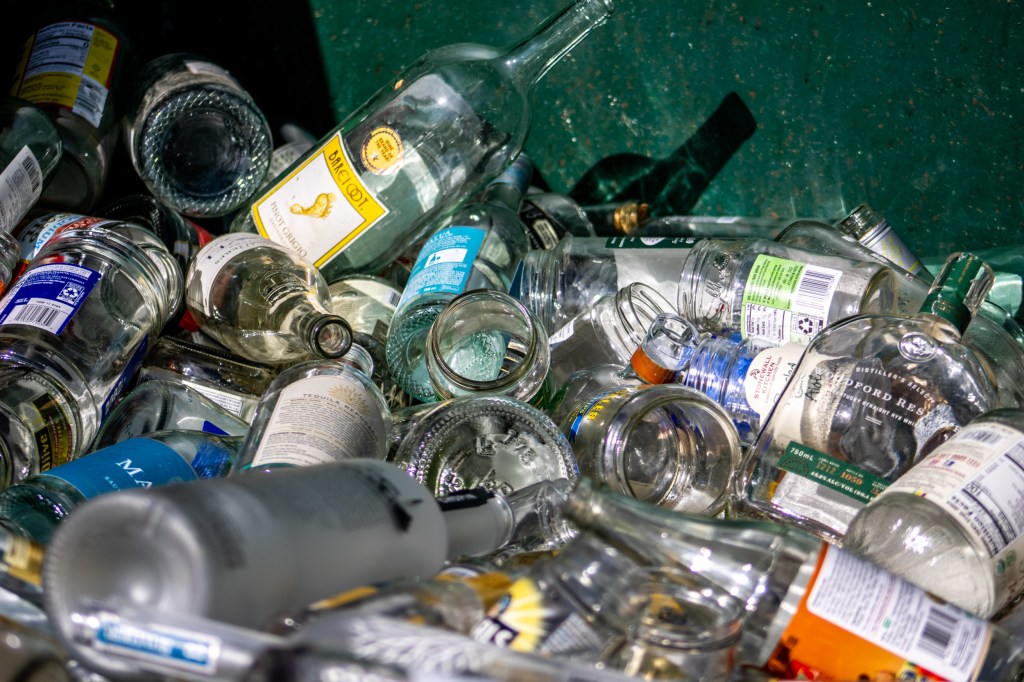
The City of Grand Junction works with processors and mills across the United States. For example, all local glass is sent to Glass to Glass, a company based out of Louisville, Colorado, which is partnered with Anheuser-Busch to create new glass bottles. The city also sells glass to Momentum Recycling, where it is crushed into cullet. Some plastics are sent to Direct Polymers, a company that grinds recycled plastic into pellets and sells them to manufacturers to make new products. Recently, the city has also been working with Replenysh, a company backed by large manufacturers such as PepsiCo, with a goal of getting more recycled content back into their products.
“I think there is a China ban on accepting U.S. recyclables, so then everybody was like, ‘Oh, there is no point in recycling,’ but that’s not true. And I can’t speak for the entire country, [but] I can say with certainty, in our area, we have end markets. We are recycling,” Jennifer Richardson said.
Where Are Materials Sent to in Colorado?
Show me the Money
So now, my fears of everything being dumped in the landfill were gone. But I still had questions. When I first moved here, I noticed we didn’t have a recycling container. After research, I found that curbside recycling was between $15 and $33 a month— something I didn’t want to pay for. I personally use the city’s drop-off center, which is free. But things weren’t adding up. Was the City of Grand Junction charging people a fee, selling the recycled materials, and using our tax dollars too? Were they pocketing our money?
“Nobody’s getting rich off of recycling,” Jennifer Richardson said.
Richardson and French filled me in on the financial side of recycling. What I learned: Recycling is a losing game financially. While there is some money coming in from the sale of materials, it’s slim pickings. That revenue does not cover operational costs. Instead, recycling is paid for by those who pay their trash and recycling bill, along with tipping fees collected at the Mesa County Landfill. In short, it’s trash that primarily pays for recycling.
“We really operate like a business, as far as you know, our revenues and our expenses, except we’re not profit-motivated. We’re a municipal operation, and so long as we’re breaking even, we’re happy,” Angela French said.
The city’s Solid Waste and Recycling Division operates as an enterprise fund to cover extra costs, mainly made up of trash and recycling user fees. It also receives support from the Recycling Recovery and Economic Opportunity Grant (RREO) to fund other various projects and services.
“You’re losing money for recycling, at least here… Well then, why is anybody doing it? Municipalities are doing it because it’s the right thing, right? You don’t want landfills to be filling up. You want to conserve resources. You want to reduce greenhouse gas emissions. Governments provide services to the community that the community needs, regardless of whether they are making money or not,” Jennifer Richardson said.
Behind the Numbers
The financials and the process look clean, but then I found that the diversion rate in Grand Junction is slightly lower than the statewide rate, and I decided to explore. The estimated landfill diversion rate, with both excluding industrial waste, is 13% as of 2022, according to the Materials Recovery Facility Feasibility Study (2023), while the statewide landfill diversion rate is 15% as of 2023, according to the Colorado Department of Public Health and Environment’s 2023 recycling totals.

My mind turned to contamination— maybe that was the problem?
The City of Grand Junction operates with about two-thirds of the city on multi-stream and one-third on dual-stream. What that means is residents are separating their recycling. Single stream means all recyclables go into one bin, while dual-stream requires some separation. Multi-stream involves separating items into five different bins.
“Our materials are really clean because of that source separation,” Angela French said.
The City of Grand Junction uses dual or multi-stream systems, which greatly reduce contamination. According to the material audit conducted at the city recycling facility in September 2023, 3.1% of the total material collected from both sources was classified as trash or contamination by weight. This means that 96.9% of the materials were acceptable recyclables that were successfully sent to markets and mills.
Gaps in Accessibility
That impressively low number led me to wonder again about the low diversion rate. Accessibility came to mind, maybe it was the fees that made people turn away, or maybe residents didn’t even know recycling was available in Grand Junction.
According to the City of Grand Junction’s 2024 Recycling Annual Report, the new dual-stream recycling system launched in 2023 now provides access to about one-third of households. Among those eligible, the city reports an average participation rate of 43%. Despite the progress, gaps in accessibility remain.
“We can’t do any recycling for multi-family. We can’t do any recycling in our parks or open spaces because our facility is really just at capacity,” Angela French said.
Changes Underway
With the rapidly growing population of Grand Junction, the current facility has not been sufficient to handle the continual growth. But as of Dec. 18, 2024, the city council voted 6-1 to approve the opening of a regional MRF in conjunction with Bruin Waste Management. The facility is planned to be a building over 58,000 square feet and set on nearly a 10-acre piece of land.
“So we’ll accept materials from haulers across the region and not just city materials, but materials from all over the western slope,” Angela French said.
This project received funding through the new Colorado Extended Producer Responsibility (EPR) law, which charges producers a minimal fee based on their product’s packaging. The fee then goes towards a fund that will pay for recycling across the state, including providing free access to recycling for every Colorado resident.
Overall, gaps remain in the system. Continued education and outreach to the community and university students about both the dual-stream/multi-stream programs and access to the free drop-off site should be further emphasized. Hopefully, changes will be underway with the new EPR law and MRF facility.
“We don’t want to just act like we’re recycling. We don’t want to just put bins out so people feel good that they’re recycling if it’s not really happening,” Angela French said.
In a time when the foundation of recycling has been shaken, the City of Grand Junction has dispelled my own doubts about recycling. With a commitment to transparency and real impact, the stigmas of recycling have been erased — at least in this small city nestled between the mountains and canyons. The City of Grand Junction Recycling has stayed true to what should happen to your recycling, showing that positive change is possible, even in places where challenges exist.
Quick Facts
Myth: “It all ends up in the landfill.”
Fact: The City of Grand Junction has end-markets and recycles about 97% of incoming recyclables.
Myth: “They are using our tax dollars and pocketing our money.”
Fact: The City of Grand Junction uses only recycling and trash payments, plus landfill tipping fees and RREO grants to fund waste services.
Myth: “It just goes to China, and they are just dumping it.”
Fact: No recycling in Grand Junction is sent overseas; rather, it is sent to processors or mills within the United States.
Myth: “It’s all contaminated anyway.”
Fact: The City of Grand Junction has a low contamination rate of about 3%.
Myth: “Only glass and metal tins are recyclable.”
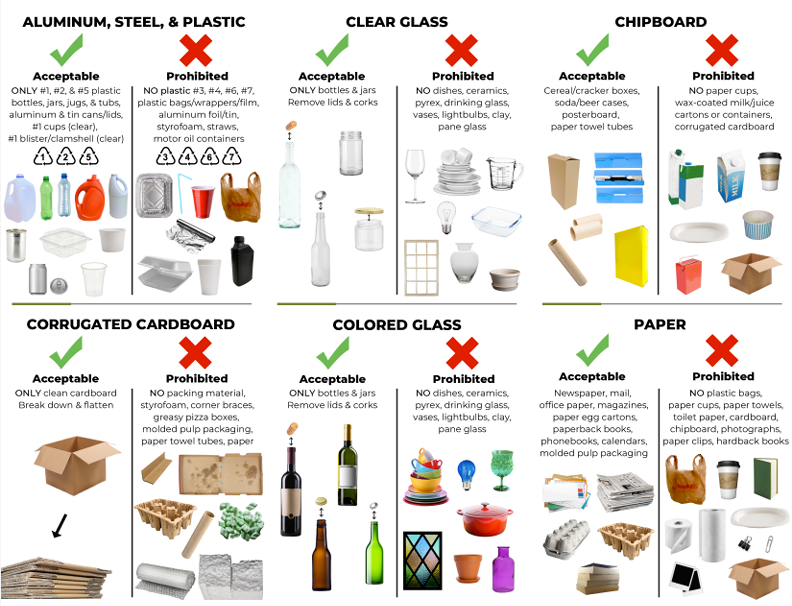
Fact: #1,#2, and #5 plastics, non-wax coated chipboard, corrugated cardboard, and paper are also recyclable in Grand Junction.
Resources
Recycling can be tough, but understanding what is and isn’t recyclable can make it easier. Here’s an infographic of how to properly recycle in Grand Junction. If cost is a concern, the drop-off facility is located at 333 West Ave, Bldg. G, Grand Junction, CO, and offers free recycling.

 blockpartygj.net