Written By: Justin Shaw, Arts and Entertainment Editor
Photos By: Isaac Jessup
Grand Junction has undergone its fair share of growth and redevelopment over the last ten years. Projects have entirely transformed untouched and vacant areas of the town into vibrant communities.
Vacant land inventory plays an important role in the redevelopment process. New businesses and housing projects eventually find their way into town thanks to some of these vacant lots.
There are 1,868.72 acres of vacant platted parcels in Grand Junction and 1,163.49 vacant non-platted parcels. A plat is a plot of land, while a platted parcel is a unit of land designated in an original plat.
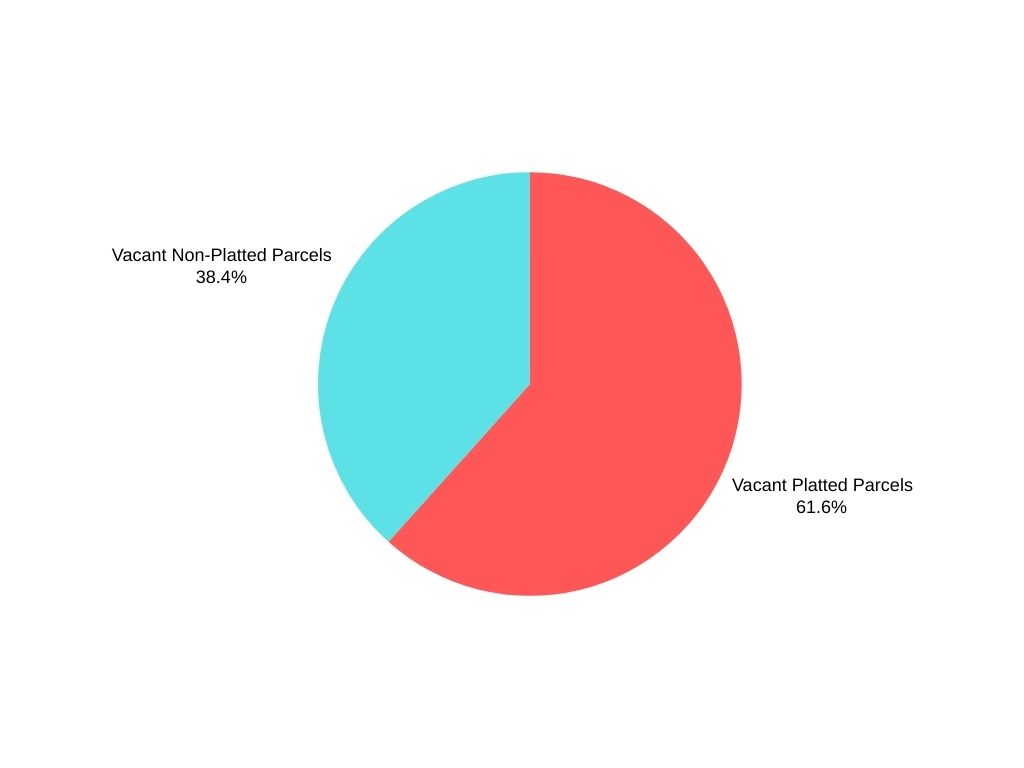
Platted parcels are like a neatly organized grids where each piece of land is clearly defined and mapped out, while non-platted parcels are more like open areas of land that haven’t been officially divided into smaller, distinct lots.
As of Sept. 2023, Grand Junction had 3,032.21 acres of vacant land divided amongst over 33,000 parcels. According to Newman, the average vacant land to total land ratio in large U.S. cities is 16.7%.
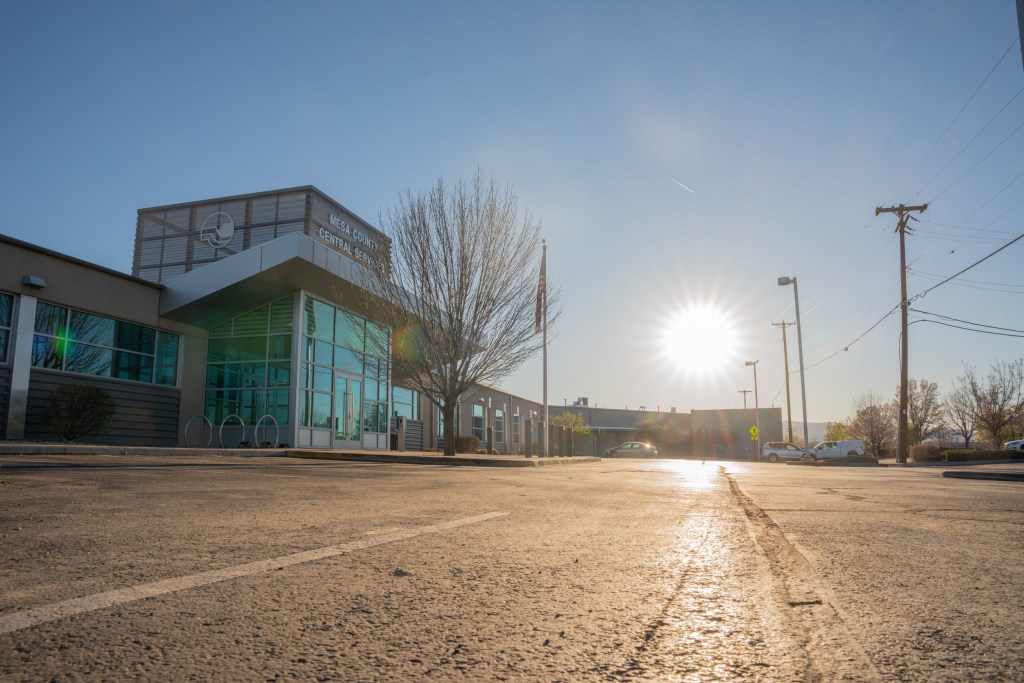
The Mesa County Planning Department provides detailed information about vacant parcels in the Grand Junction area. With data on both plated and non-plated parcels, it is crucial to identify where the vacant land is for redevelopment pruposes.
Grand Junction is growing quickly, and making the best use of available space to accommodate all new residents is crucial. From 1969 to 2022, Grand Junction’s population grew by 192.58%, outpacing Colorado’s 169.62% increase and the United States’ 65.57% growth.
Vacant land redevelopment can help usher in the next era of Grand Junction’s development as a major hub along Interstate 70.
Greg Moberg, Mesa County City Planner, talked about how the location of Grand Junction plays a vital role in attracting new businesses and residents to town.
“Grand Junction has seen a significant rise in redevelopment during the past five years,” Moberg said. “The Las Colonias Park and Butterfly Pond projects were massive initiatives that completely reshaped the south area.”
Las Colonias has undergone significant redevelopment in recent years, with brand new amenities such as an apartment complex, RV park, and public pond being built. Moberg said the location for this type of reconstruction was ideal.
“Back in the early 1900s, all the industries were located on rivers because they just threw their waste in there and went downstream,” Moberg said. “This idea of redevelopment is fantastic, and what an amazing place to be where you can simply walk out the door and be right on the river trail and by the water.”
Given that the Colorado River runs directly through Grand Junction, a riverside initiative for residential and commercial lots seems like a great concept.
However, Grand Junction still has abnormally high percentages of vacant land. According to the 2020 United States Census, Grand Junction covers a total area of 25,649 acres, meaning that nearly 12% (11.82) of the city’s land is vacant. In terms of vacant property use, Grand Junction has not yet reached its full potential.
Many vacant lots stay untouched, not due to a lack of buyer interest, but due to infrastructure issues.
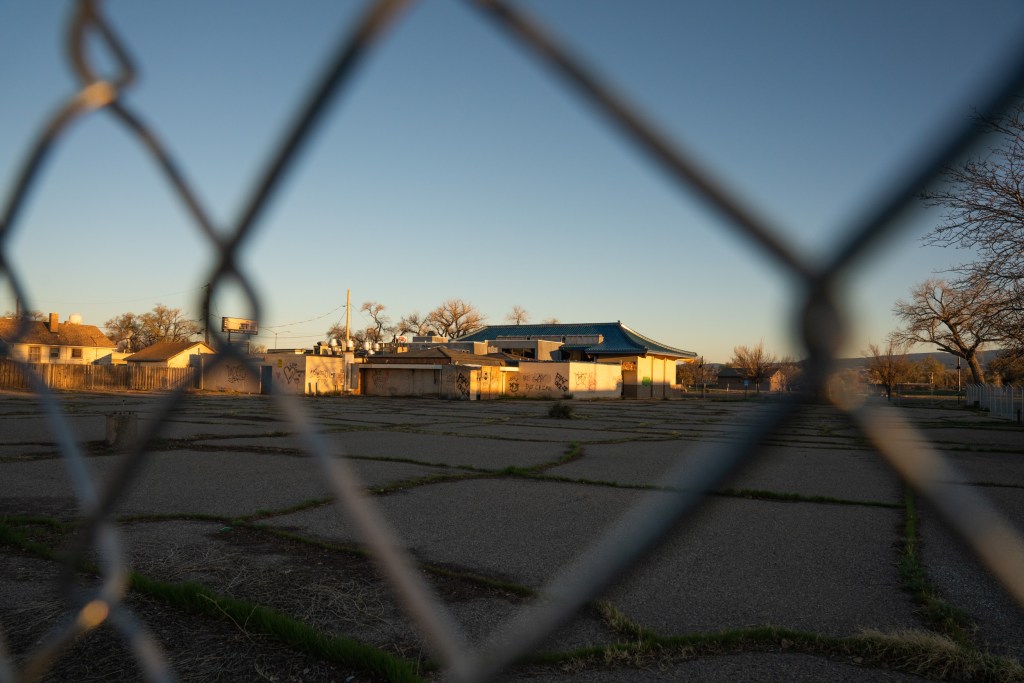
“Usually, the biggest thing for vacant properties or development is that the infrastructure isn’t adequate, like water, sewer, and road access,” Moberg said. “Having employees, staff, or people to hire can be tough if you don’t have any. High-end commercial properties require extra staff with specialized skills, which [Grand Junction] just lacks, making it difficult for them to locate here.”
Due to a lack of infrastructure, previous proposals to build multiple breweries along Riverside Road were scrapped. Only one brewery, Kannah Creek, was built on this site because highly concentrated waste from the breweries could not be efficiently treated in large quantities.
Insufficient infrastructure seems to be the biggest problem with vacant property and its utilization. The expenses of building the necessary infrastructure exceed the costs of buying vacant property as is, resulting in an exceptionally large amount of vacant land.
Curtis Englehart, executive director of the Grand Junction Economic Partnership (GJEP), discussed how that issue influences business decisions and development in Grand Junction.
“We have really great spots that probably don’t have sewer or utilities run to them, and that gets very expensive,” Englehart said. “That horizontal infrastructure is definitely a challenge, and it just adds to the bottom line when businesses are trying to grow.”
Grand Junction’s horizontal infrastructure truly restricts the development of these properties. However, this is where GJEP comes into play.
Their role is to promote economic development and attract primary jobs to the Grand Junction area. A primary job is defined as anything that pays over the median annual earnings, which is about $54,000 annually. Their goal is to diversify the economy, bringing in jobs from all industries and ensuring that all industries are thriving.
However, Englehart says that the infrastructure issues aren’t stopping the city from moving forward with new development plans.
“Much of it is open communication with our municipalities and county government,” Englehart said. “Just seeing what their priorities are and what they’re looking to do long term helps that land move forward towards development.”
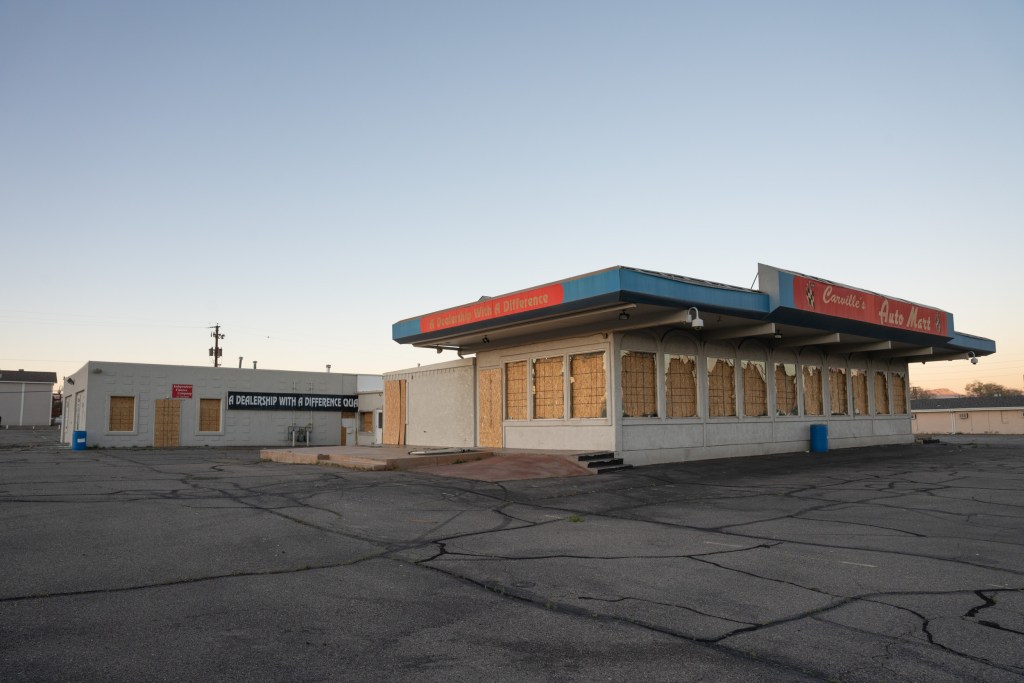
As Grand Junction faces infrastructure and vacant land issues, it remains committed to growth. With multiple major redevelopment projects underway and collaborations formed to tackle infrastructural problems, the city is positioned for an era of change.
From redeveloping significant neighborhoods to attracting high-value businesses, Grand Junction is establishing itself as an emerging economic and creative destination. With each new project, the city strengthens its image as a growing economic hotspot on both the statewide and national levels.

 blockpartygj.net