Story By: Grace Smith, Community Resources Editor
Photos By: Nicole Roberts
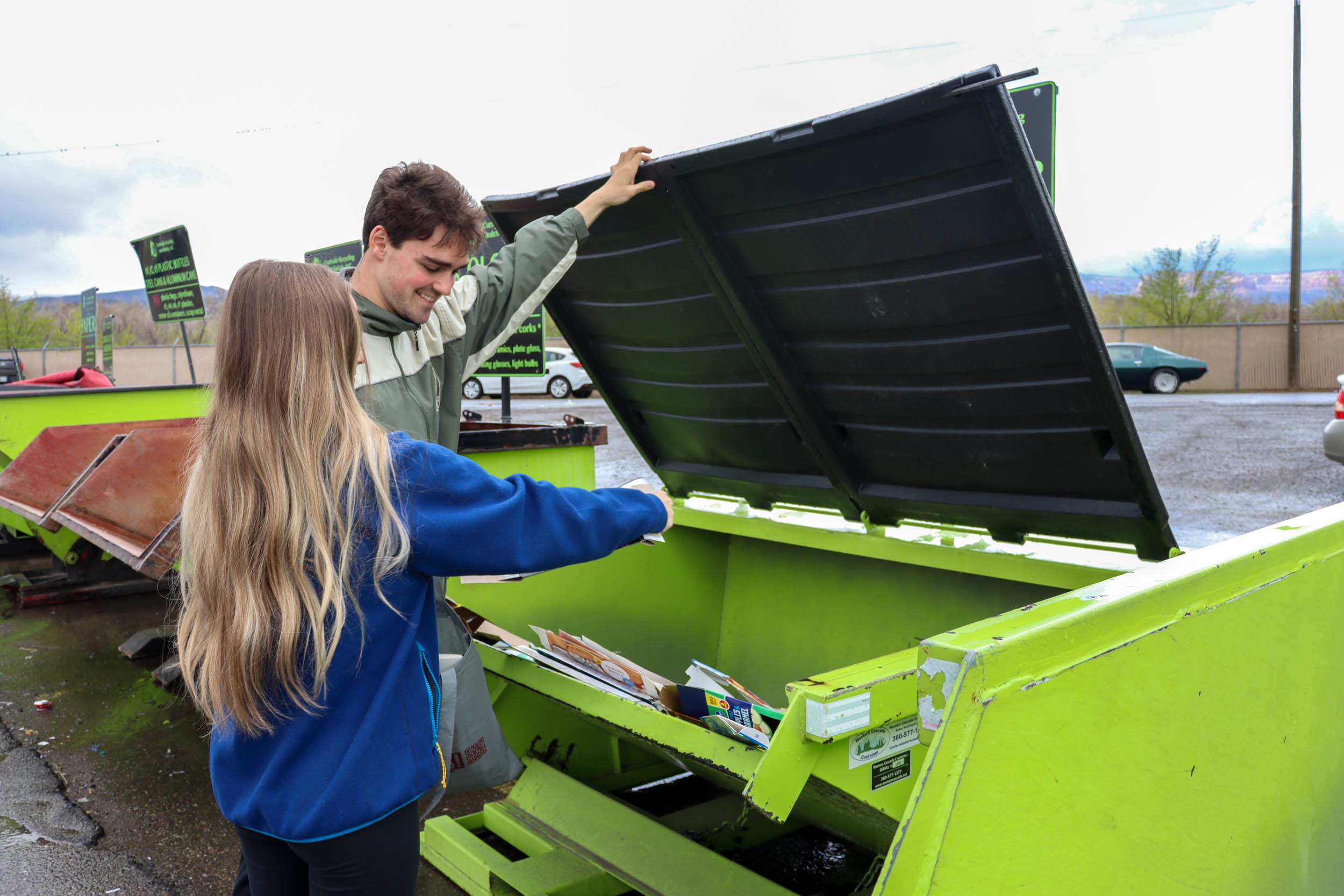
Beyond curbside pick-up and drop-off services, there is a lot that goes on behind the scenes of recycling to ensure that as few materials end up in the landfill as possible.
“Nobody wants to be living on top of a landfill, and that’s exactly where we’re headed if we don’t start managing our resources,” said Recycling and Waste Reduction Supervisor Kym Beck.
The city of Grand Junction purchased Curbside Recycling Indefinitely in the spring of 2022, but for over 25 years prior to that, the company was privately owned and operated. During that time the company was independently contracted with the city to provide recycling services, but since the city officially bought the recycling center it has been able to grow.
“It’s really allowed us to expand and develop new programs,” said Beck.
“Everything was collected manually by a truck and trailer, and by hand by a crew of two,” said Beck about what the recycling collection process used to be like. “Now we’re switching and phasing in areas to be an automated collection dual-stream program.”
A dual-stream program means that recycling is collected from two separate bins, one containing plastic numbers one, two and five, and tin and aluminum cans, with the other containing paper, cardboard and fiberboard. This system has been adopted in place of a multi-stream program, where the recycler has to separate everything before it is picked up. With the added convenience of the dual-stream program, the hope is that even more people will begin to recycle.
“With the old program, the multi-stream collection, we had over 4,000 households participating,” said Beck. “City-wide, there are over 20,000 trash accounts, so if we can capture more of that percentage, that’s going to make a huge difference.”
“With the new program we are also able to introduce a curbside yard waste seasonal collection,” said Beck. “That’s huge because a landfill study showed that over 27% of the material ending up at the Mesa County landfill was organic material, and just the fact that we can now help keep the yard waste out of that.”
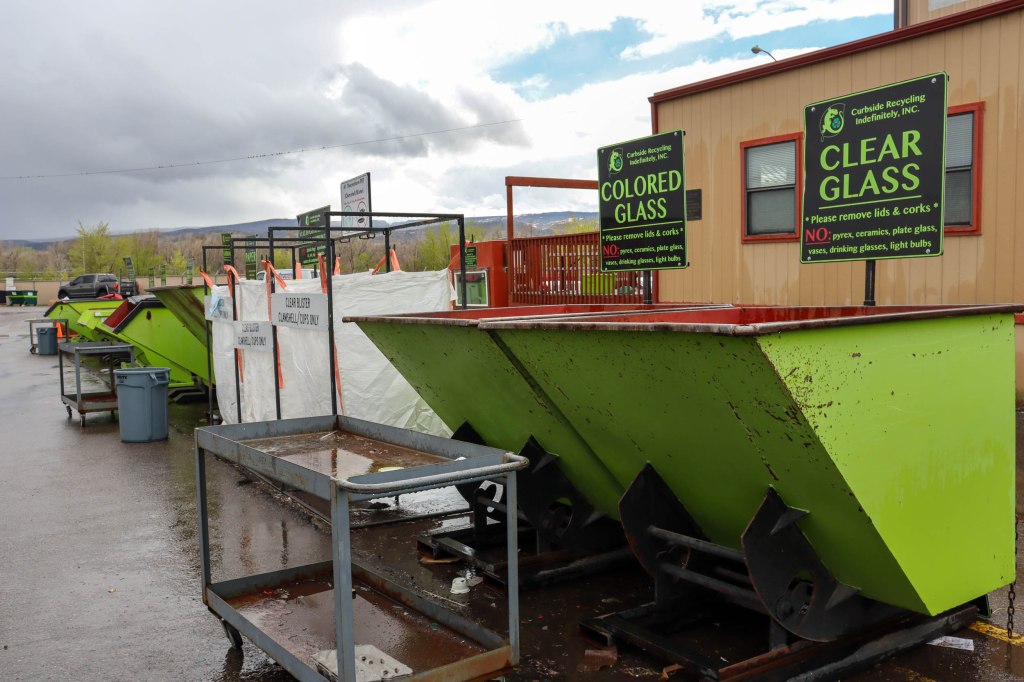
In addition to the expansion of the curbside service, the recycling drop-off has also grown in recent years.
“The drop-off has evolved from five containers to know what you see out there,” said Beck. “We try to do a drop-off audit quarterly, just on the traffic count, and roughly it’s about 300 cars a day, and it’s open six days per week.”
“The other exciting pilot that we are currently doing is the food waste collection, which we have introduced to restaurants downtown. Hopefully this spring and summer we can introduce it to local District 51 schools, hospitals, and more institutions to capture that food waste.”
“Even though the pilot we have going on currently is focused on restaurants and institutions, we have a free food waste drop-off that is also located here,” said Beck.
It is a class three facility, which means they can many different types of food waste including dairy, meat and bones. The recycling center has also started to take on event recycling.
“That’s another thing we did last year with Las Colonias,” said Beck. “We really reduced the amount of material that they sent to the landfill, because we captured it and it was clean.”
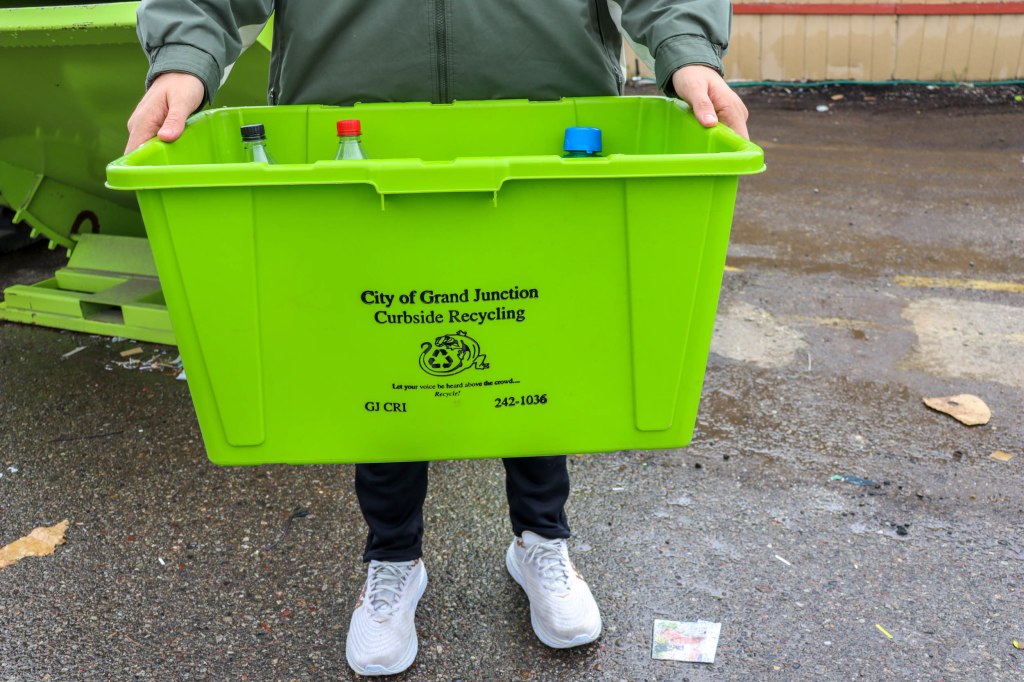
In addition to discussing the new programs at the recycling center, Beck explained what happens to the materials after they are collected or dropped off.
“Everything that is processed through here is done manually, it’s done by hand, we don’t have optical sorters,” said Beck, “We don’t have expensive equipment because a facility is $7 million to $10 million and we just can’t justify that for our location.”
Once everything is sorted through they send it to mills for it to be processed. In this process, they have to make sure they have enough material ready to fill a full truckload before they ship it out.
“We don’t want to defeat the purpose here, and we need to be mindful of our carbon footprint so we make sure we have a full load,” said Beck, “We also try to stay as local as possible.”
“Utah is the closest mill for paper,” said Beck, who also explained that the plastics go to Direct Polymers in Denver.
“With the feedback that we’ve received from the mills where we ship the material, they said in comparison they’ve never seen such quality clean material,” said Beck.

Before these materials become cleaner through the sorting process, Beck said that glass is the number one contaminant of recycled materials.
“Even though glass is recyclable, when you have it with the other material it can cause issues,” said Beck.
They can not accept glass with their dual-stream program because it needs to be recycled separately. However, it can still be taken to the drop-off.
“If it’s not able to be picked up curbside, we still need to keep it out of the landfill, so the drop off is the next best option,” said Beck.
In addition to being a place to take recyclable materials that cannot be picked up curbside, the drop-off provides opportunities to recycle to those who do not have access to the curbside service.
“Just because people live in an apartment complex doesn’t mean that they shouldn’t have the ability to recycle,” said Beck.
“It’s made really easy because all the bins are set up, so you know exactly what to deposit where,” said downtown Grand Junction resident Julianne Glotfelty. “It’s not very confusing and you know that your recycling is actually getting taken to the right place.”
The marketing coordinator for the Sustainability Council at Colorado Mesa University Jillian Richardson offered another idea regarding the benefits of a drop-off service.
“I think that drop-off recycling is a great option, I think especially from a transparency perspective,” said Richardson. “When you drop off recycling yourself, you know that items are getting recycled, which can sometimes be an issue on campus.”
“We love our customers and providing information and knowledge and answering questions,” said Beck. “I feel like the more people know about recycling, that there’s more to it than just putting it at the curb, the more informed they are and they spread that knowledge and it’s beneficial to really knowing your stuff is getting recycled.”
“When you can tour a facility or you can talk to an attendant and get the answers, that’s going to encourage people to recycle responsibly.”
The recycling center is located at 333 West Ave inside the Municipal Services Campus. More recycling guidelines and a full list of what can and cannot be recycled can be found on their website.

 blockpartygj.net