
By: Collin McKenna, Outdoor Recreation editor
Photos By: Kaleb Niumata
When the COVID-19 pandemic seemingly paused life as society knew it, the ripples were felt all over the globe.
In January 2020, rumblings of COVID-19 in the United States had started to surface. These rumblings continued to grow until March, when the country got its first taste of what was to come over the next two years.
And what a taste it was. According to the Centers for Disease Control (CDC), in the three-week span from March 18 to April 8 the number of positive COVID-19 cases in the United States ballooned from just over 7,700 to over 217,000.
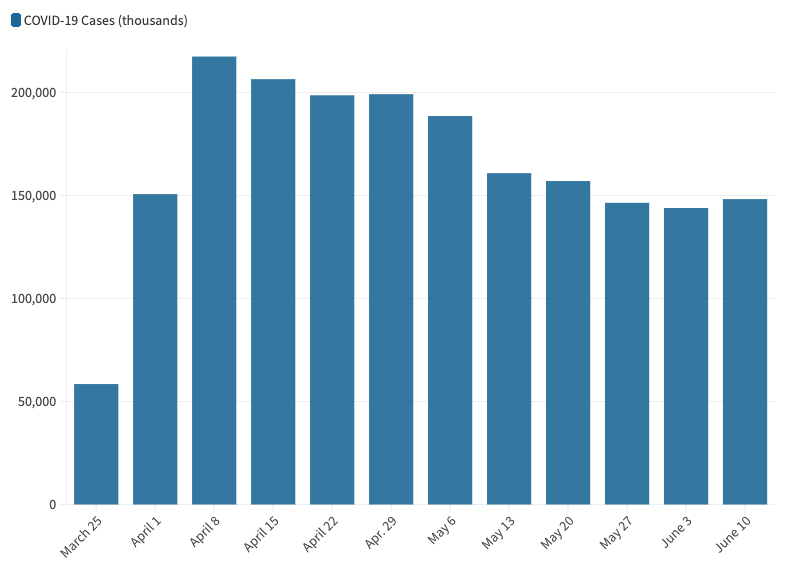
A bar chart of positive COVID-19 cases in the United States from March 25, 2020 to June 10, 2020.
The American government then decided to enact a two-week quarantine period for the public. Life as the American public knew it shut down. Schools and most businesses closed, forcing both adults and children to have to learn to work from home.
Many companies were able to navigate this storm, and many were not. Those that did were forced to downsize, leading to millions losing their jobs.
Unemployment rates across the country spiked. However, the impact varied from city to city, and smaller cities like Grand Junction, Colorado were hit differently than larger cities like Denver.
According to the Bureau of Labor Statistics (BLS), in February of 2020 Grand Junction’s unemployment rate sat at 4.2 percent. When cases spiked and the quarantine was introduced the next month, the unemployment rate nearly doubled, getting to 7.1 percent.
And then it climbed even higher. In April of 2020, the unemployment rate jumped to 12.1 percent, the highest it would reach during the pandemic and the first time it was over 10 since February of 2013 (BLS).
People started to slightly regain their footing after that, with Grand Junction’s unemployment rate dropping to 5.8 by August (BLS).
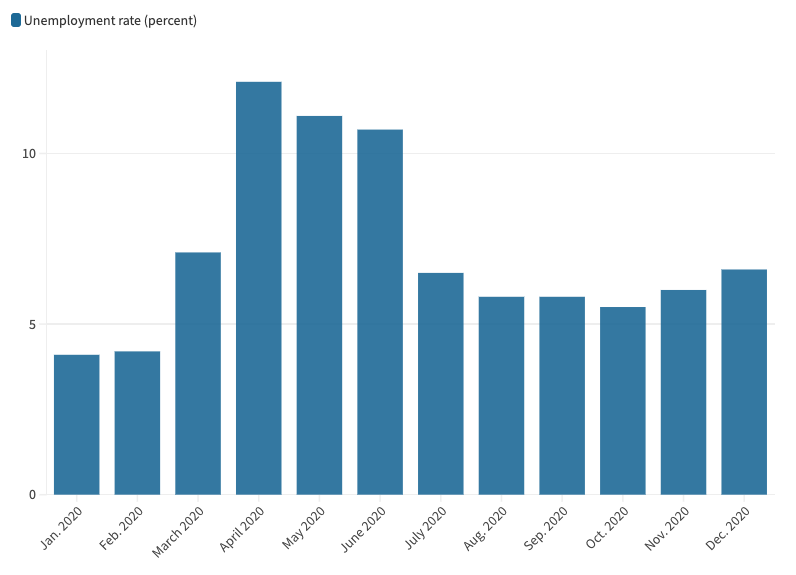
A bar chart of the unemployment rate in Grand Junction in 2020.
But even as people began to find jobs, the country was very much still mostly shut down. All parts of life were affected. People couldn’t go on vacations, and those that were getting married had to decide whether to keep the wedding on or postpone.
Most decided to postpone. Unfortunately for people like Dave Murphy, owner of Grand Junction-based DJ company Moonshine Music, LLC., these postponements directly translated to lost business.
“I lost 14 wedding bookings in the summer of 2020 alone,” Murphy said.
Murphy’s company is not a large one. At the time of the first large spike, Murphy was its sole employee. That meant that each booking made a large difference in the success of Murphy’s business, especially with each wedding booking being valued by Murphy at between $1,200 and $1,600. That’s a total of almost $17,000 lost for Murphy from wedding bookings alone in the first 6 months of the pandemic.
Moonshine Music was not able to hire at the time but was able to bring on one other employee once business picked back up again towards the end of 2021. “Being able to hire that employee right towards the end of the pandemic really helped boost my business. Now it’s back to what it was before,” said Murphy.
Murphy’s troubles are a good representation of many in Grand Junction at that time; as it is a smaller city, there are many small businesses that were greatly impacted by the shutdowns.
One of the reasons the pandemic hit Murphy so hard was due to the industry he works in; he offers his services at large social gatherings, which were prohibited by the quarantine orders at the time. Businesses in the leisure industry, however, saw an increase in sales once the public started to go outside again, where there were less strict rules as to the size of public gatherings.
The Grand Junction area is a mecca for outdoor recreation, as it sits on the Colorado river, is less than 30 minutes from the Colorado National Monument and is less than an hour drive from the Grand Mesa, which is the largest flattop mountain in the entire world. So, it makes sense that the leisure industry would see an increase in sales in an area where many businesses were closed but many people love to go outside.
“Our company was very well prepared when COVID-19 hit,” Alma Sekulich, the HR Manager at Innovative Textiles, said. “They furloughed all employees for the first couple weeks, and then brought them back in waves as the amount of work to do increased. We weren’t forced to release anyone, and only one person left in total, so coming back to work was an efficient process.”
Sales at Innovative Textiles have slowed considerably since the end of the pandemic, though.
“There’s just less demand for our products now. People are back at work now and have less need for them,” Sekulich said.
But because Innovative Textiles was more prepared for the pandemic, they didn’t need to hire during the times when unemployment in the area spiked. They were lucky.
So how was Grand Junction, and Mesa County as a whole, able to fight back against the rising unemployment rates caused by COVID-19?
“Mesa County had a program called the 5-Star program which rated businesses on their efforts to protect staff, customers, and the community, and those companies that were recognized typically saw boosted business as a result,” Sekulich said.
Those that were unemployed during this time were able to use these ratings to their advantage, too.
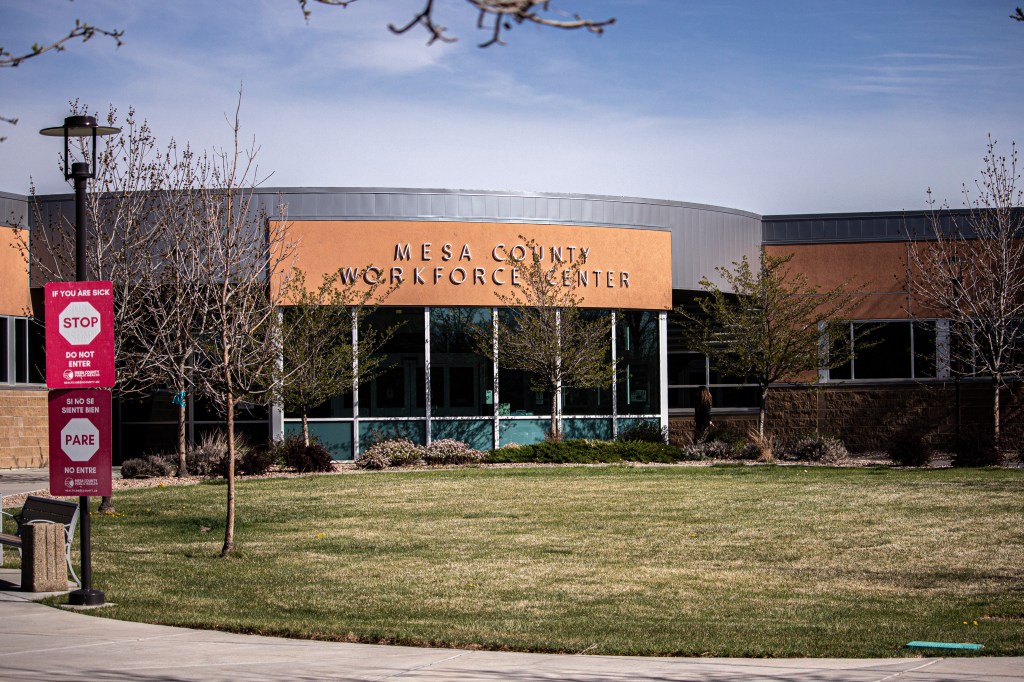
The Mesa County Workforce Center helps those that are struggling with unemployment find jobs that help get them back on their feet. (Kaleb Niumata).
Some saw opportunities for jobs with companies that grew as a result of a high rating, while others were able to identify places they would feel safe working at.
It took time, but Grand Junction was able to fight back against rising unemployment by utilizing programs like these. Grand Junction rebounded after every spike in unemployment, and is now fully back to levels of unemployment seen before COVID-19 was even a thought.
No two companies were impacted by the pandemic the same way. Some were forced to close, and others weathered the storm.
Similarly, no two cities were impacted the same. Grand Junction did its best to weather the storm, and weather the storm it did.

 blockpartygj.net