
Story By: Julia Blanchette, Sacred Spaces Editor
Photos By: Summer Fredlund
The diverse system of medical personnel at Saint Mary’s Hospital has dedicated their careers to providing comfort and care to the Grand Junction Community. Surgical Technician Danielle Hamilton plays one of the vital roles within the functioning healthcare system.
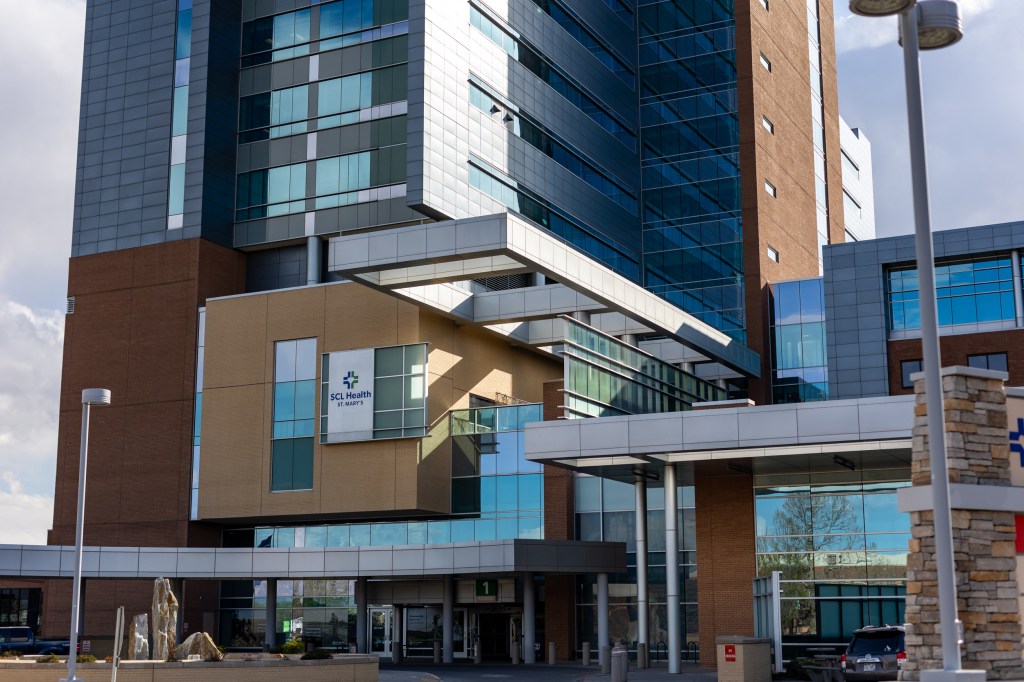
Saint Mary’s is identified as a level-one trauma center with numerous specialized medical practices. This hospital is the largest medical center between Salt Lake City and Denver.
There are differentiated roles within the healthcare system that are of equal importance. All roles must be filled to create a well-oiled treatment system for ill patients.
“Within the operating room where I spend a large majority of my time, all staff present always serve an important purpose,” Hamilton said. “We work together to achieve the same goal and without all roles being covered, we are unable to successfully treat our patient.”
Surgical technicians are often thought to assist with surgical instruments inside the operating room. Although, technicians like Hamilton are tasked with additional jobs throughout the course of a day. At the start of each work shift, surgical technicians are expected to plan any given number of cases and assign them to available operating rooms. They then need to gather all supplies necessary for the anticipated operation.
“This part of my job involves high levels of organization and I find it very relaxing but also very tedious,” Hamilton said. “I must verify that all the surgical instruments are operating correctly, have been placed in their rightful positions, and have been accounted for before the operation even begins.”

Fredlund, April 19).
Counting is a vital part of this process. All surgical instruments must be counted and recorded multiple times. The number of instruments in the operating room at the start of surgery must match the number of instruments present at the end. The operating room staff cannot conclude an operation until all instruments are accounted for. Hamilton explains that tools have the potential to get misplaced inside the human body.
“All of the continuous counting may sound brutal to some, but I am able to count on autopilot,” Hamilton said.
Technologists assist in a wide variety of surgical cases. Many of these cases range in complexity and severity. Surgical techs are trained in every specialty in the operating room in case they are on call and needed in trauma cases.
“I personally assist on a lot of orthopedic cases,” Hamilton said. “I sanitize and manage the hardware for replacing full joints, like knees and hips most days.”
Within the operating room, there is typically an anesthesiologist, nurse, surgical technician, surgeon, and physician assistant. All these individuals work together to perform one surgery.
The atmosphere in the operating room can be different from case to case.
“Some cases are relaxing, while others can be energetic,” Hamilton said. “If the case begins to turn stressful, adrenaline enters the room, and everyone grows silent.”
Witnessing and assisting operations can be emotionally and physically taxing. Recovering from cases that are categorized as gruesome may look different for all staff involved.
“I tend to talk to people I trust about my hard cases,” Hamilton said. “This helps me get things off my chest and go into the next day without carrying any previous baggage.”
Kaely Gorter is a nurse currently employed at Saint Mary’s hospital. She spends most of her time caring for cancer patients on the oncology floor. Similarly to surgical technologists, nurses also encounter difficult cases.
“Many of my days can be emotionally draining because I witness a lot of loss,” Gorter said. “Talking to other nurses or family who have health care experience really helps me recover because they understand my feelings well.”
Nurses are present in every part of the hospital. Although, in each place, their role may look slightly different.
“Some days, I have wonderful conversations with my patients and leave work with a full heart,” Gorter said. “Although, some days I experience high volumes of unpleasant jobs like paperwork and charging.”
Nurses can closely involve themselves with patients but also must fill all the gaps between the hospital staff’s roles.
“Nurses are the workhorse of the non-sterile field in the operating room,” Hamilton said. “They assist operating room staff by retrieving supplies, patient charting, and taking care of the patient in post operative care.”
The practice of medicine takes many different types of staff to run smoothly. All these roles are equally important when compared to one another. Although, the job that each staff member holds requires different skills.
“Personally, as a surgical technologist, your mind must work quickly, sequentially, and always be thinking ahead,” Hamilton said. “The ability to multitask is also very vital to my job.”
Hospitals are essential to every community because many people have medical needs. Surgery is one of many ways to practice medicine and heal the human body.
“What we do in the operating room is important because depending on the surgery, we are in a way giving people their lives back and improving their quality of life,” Hamilton said.

 blockpartygj.net