
Story By: Grace Smith, Community Resources Editor
Photos By: Mariah Hokit
The transition from winter to spring in Mesa County has been the backdrop for changes and turmoil within School District 51. When the announcement was made in February that there would be school closures in the district, students, parents, and other community members did not have a lot of time to get used to the idea before a decision had to be made. The school closures have caused some controversy and have had a big impact on students and their families, and there could be even more impact on the district and the community due to the outcome and how this situation was handled.
In October of every school year, there is an official enrollment count done throughout the district to get an accurate number of how many students are in school. On November 28th, the district got the numbers back for the 2022-23 school year. The district demographer, Shannon Bingham, receives those numbers every year with the latest enrollment projections. Bingham has been the district demographer for the past 18 years, and this year he brought those enrollment numbers to the school board because the data was concerning. The board was informed of the concerns in December before the district’s winter break.
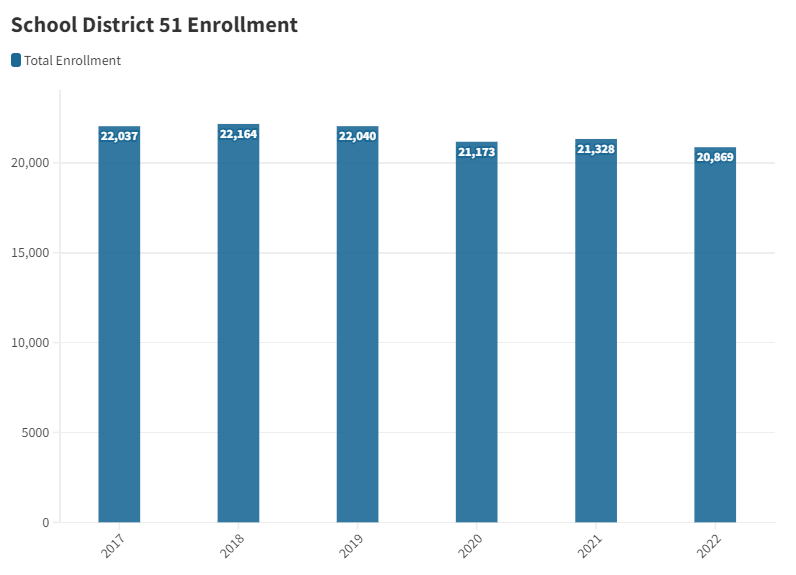
In Mesa County, enrollment numbers were down by over 1,300 students since the 2018-19 school year. This year enrollment declined by 459 students, and the demographer projected that future annual student decreases will range from 225 to 396 per year through 2030. That would mean 2,359 fewer students going forward.
These lower enrollment numbers in School District 51 are in line with information released from the Colorado Department of Education in January of this year that brought to light the issue of low enrollment throughout the state. Statewide, there was a 0.37% decrease in enrollment at the beginning of the 2022-23 school year compared to the previous one. There were 3,253 fewer students in preschool through 12th grade in Colorado.
This decline in enrollment happened for several reasons. For Mesa County specifically, there was a decline in birth rates. This decline has been happening since 2006, and the impact of this downward trend is being felt more heavily now after time and when combined with other factors. Another factor that led to lower enrollment was the Covid-19 pandemic. School District 51 went online at the peak of the pandemic in the spring of 2020, but even as things started to recover and in-person school resumed, enrollment was down. It was the national expectation that eventually schools would recover the enrollment numbers they lost during the pandemic, but in School District 51 the numbers simply did not happen like it was expected. This is partially due to competition from online and non-neighborhood schools that increased following the pandemic. The Colorado Department of Education stated in a press release that there were a total of 30,799 students registered in online educational programs this year.
This expectation of eventual recovery after the pandemic is one of the main reasons why many didn’t see this coming and the decision to close schools happened so fast.
“I don’t speak for everybody, but I’m pretty sure that we all expected those numbers to be much higher,” said Dr. Kari Shotles, representative of District B on the D51 Board of Education.
“Nobody expected to continue to lose students, and nobody expected to lose so many students,” said Dr. Sholtes, “I think through the pandemic we were all just like ‘Oh those kids will come back.’”
The first public presentation about this issue was on January 17th at the first in a series of school board meetings where Bingham explained the enrollment data, projections and concerns. At subsequent meetings where the issue was discussed, D51 Chief Financial Officer Melanie Trujillo helped explain the fact that the declining enrollment needed to be addressed because of how it affects the budget and staffing within the district.
Since enrollment declined, schools were overstaffed, which means they had unfunded positions. The main issue that caused this was that the staffing model was not being met properly because the student-teacher ratio that the staffing model calls for was unbalanced.
It was these staff and budget concerns that created the need for adjustments in the district in light of low enrollment. School consolidation was considered and eventually determined to be used as the solution to the problem. While “consolidation” is the term that has been used to refer to this matter, the decision that was actually made was to close schools and redistribute students among existing schools. Dr. Shotles offered some clarification on this matter.
“We have never talked about school consolidation. That is a euphemism for what we are doing, which is closing schools,” said Dr. Sholtes, “Everybody is using that term to soften the fact that we’re closing schools.”
A school efficiency study was done to determine which schools would be recommended for closure. Western Demographics, a Colorado corporation which is owned and operated by Shannon Bingham, began this study by looking for schools that had lower enrollment or poor building conditions, as well as other factors such as whether they had room for future growth and if changing surrounding boundaries would be logical. Ten schools were identified to be considered and go through an additional evaluation process which included a visit to the school to evaluate the condition further. These schools were scored based on their condition, including the adequacy of walls, ceilings, floors, cafeterias, libraries, gyms, front facades, drop-offs, parking areas, roofs, playgrounds, classroom sizes, hallway widths, restrooms, acoustical treatments, special education classrooms, preschools and kindergarten facilities. Each school was given a letter grade to provide a more concrete understanding of building conditions. After this evaluation, the list of schools was narrowed down and another evaluation was conducted including site visits with receiving school principals and area directors. The purpose of this evaluation was to further consider factors such as program needs and class sizes.
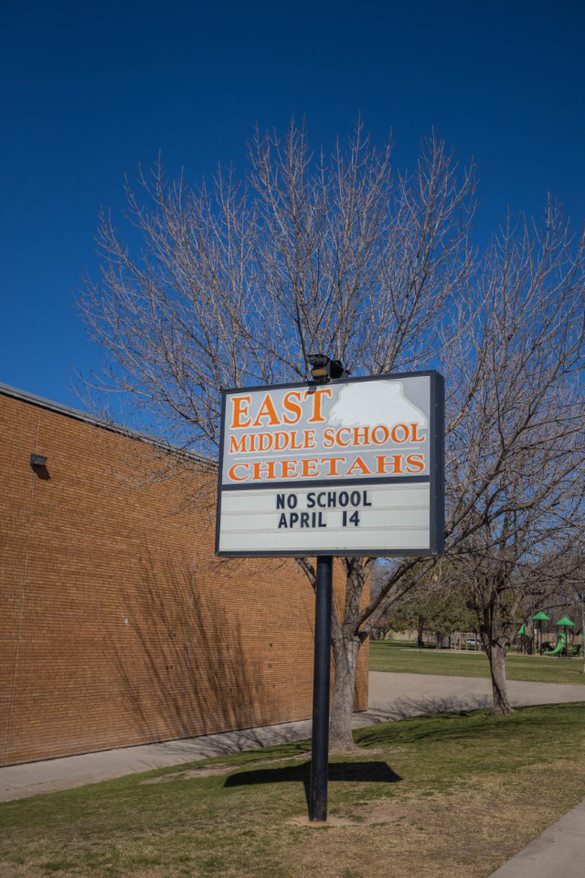
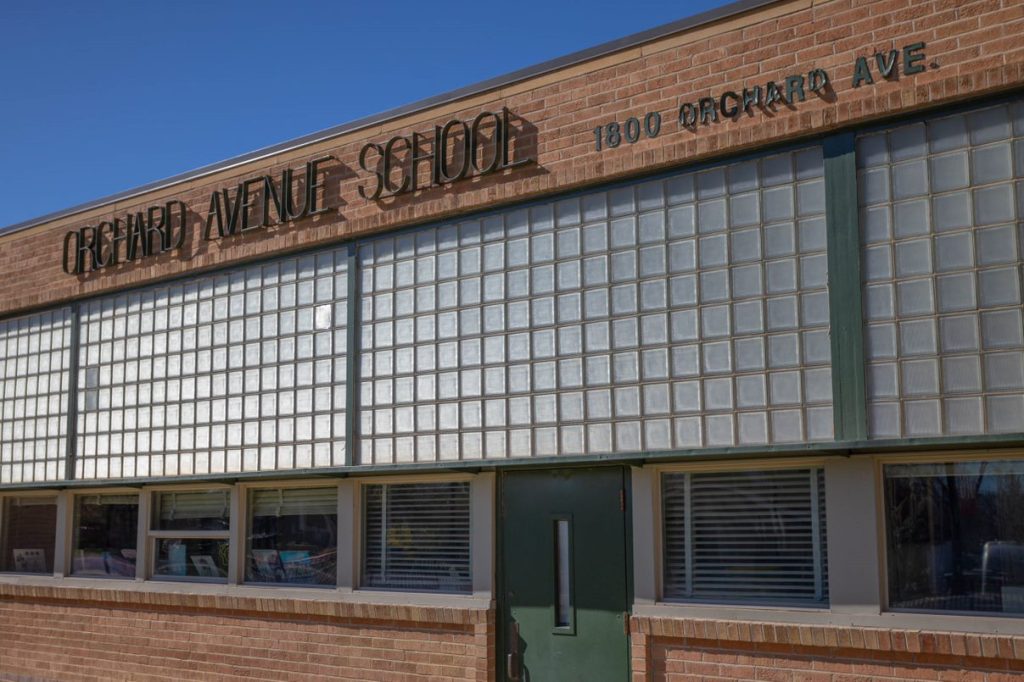
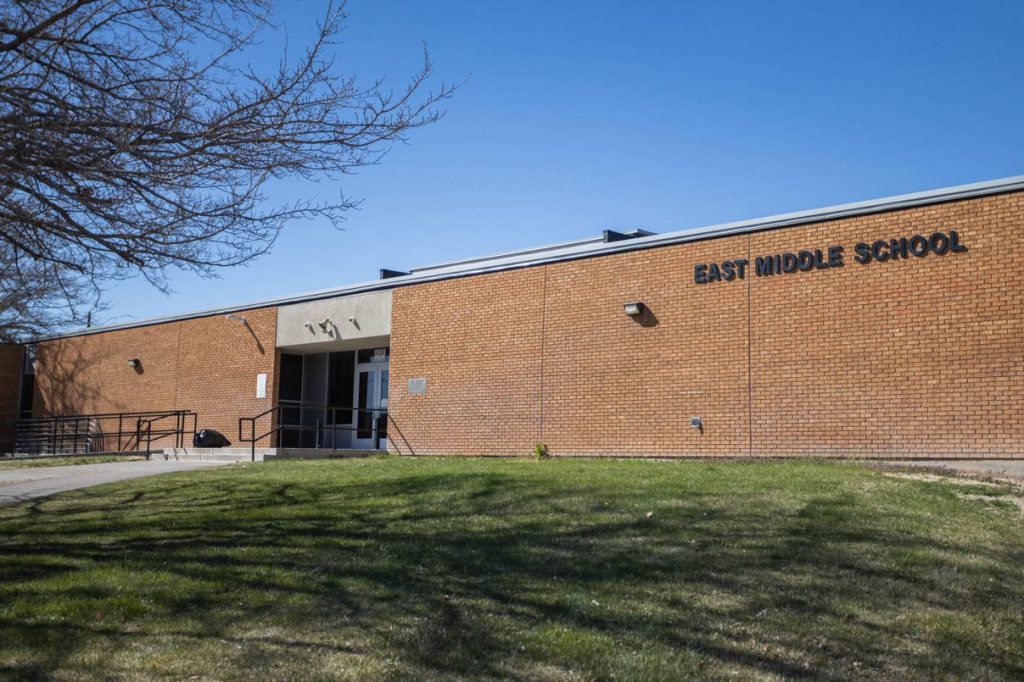
The outcome of this process was the recommendation that two elementary schools and one middle school be closed: Lincoln Orchard Mesa Elementary, Orchard Avenue Elementary, and East Middle School were the schools chosen.
When these recommendations were made, there was some deliberation before an official decision. During this time, there was a lot of worry among students who wanted to stay at their schools and parents who didn’t know what would happen if their child’s school closed down. Even though there was a plan for where students would go if their school were to close, the suddenness of the enrollment data being presented to the public and the decision to close schools left many community members shaken.
On March 9th the decision was made that East Middle School would be closed. The decision to close elementary schools would be deferred until the following school year in order to allow a designated committee more time in determining if closing those schools is best for the district and the students and families that it serves.
“The school board did the best they could in this situation,” said Payton Pemberton, a student in the Education Program at Colorado Mesa University who will graduate with her teaching certification in May.
“However, it could have supported educators more,” said Pemberton, “There are a lot of people affected by this border change and school closure, and through all this, the board was solely focused on academics and the health of the building.”
Dr. Sholtes spoke about how the decision to defer the elementary school closures can allow for a more thorough process of decision-making instead of only utilizing the few tools available in the process, such as academics and building conditions as Pemberton mentions, in such a short amount of time.
“What we have to do is implement a process that addresses the whole problem. And yes, [the demographers] tool might be one of the tools we have to employ, but we actually have to engage, we have to do the work and we haven’t done the work yet,” said Dr. Sholtes, “We are supposed to be community driven.”
Another interesting aspect of this situation is how it affects the community as a whole beyond just the parents, families and district. The quick timeline on which the decision to officially close East Middle School was made frustrated some members of the community.
“As a parent, I am very unsettled about the D51 school board running on a majority 3-2 votes which has proven to have not the best interests of the school at heart,” said Amanda Rod, a community member and parent who represents someone in Mesa County that has had their trust in the school district broken.
“I think we have damaged people’s trust in us,” said Dr. Sholtes, “I think we already did it, but how do we build it back? I think by taking the good faith steps to do what we’re supposed to do.”
One of the reasons why it is important to have a sense of trust built between the district and the community is because not having that trust could potentially affect the funding of the school district. Part of the district’s budget comes from per-pupil funding from the state which caused the need for change due to low enrollment in the first place. However, the rest of the district’s funding comes from taxpayers.
If the school district needs to cover a large expense, that is something that taxpayers have to vote on to be able to give the school district the money to do it.
“If we need a new school, we have to go to taxpayers and say ‘Loan us money so that we can build this new school.’ And if everybody distrusts us we can’t build those new schools,” said Dr. Sholtes.
In 2021, Mesa County passed ballot measure 4B to increase taxes to replace the Grand Junction High School building. The community voted to do this, which supports the idea that the school district and the community have to work together to reach goals.
“We cannot have a good public education system unless we have money for curriculum, and we have to have money for curriculum for taxes, and if people don’t trust us we get none of that,” said Dr. Sholtes.
The school district currently has a mill levy override measure that passed in 2017 to raise taxes for 10 years to fund things such as instructional materials and additional calendar days in the school year. This mill expires in 2027, and the community within D51 boundaries will have to vote to give the district or else funding will be lost for things as important as curriculum.
The consequences of not having a good public education system in Mesa County affect the community as a whole. The quality of a school district can be a deciding factor in whether or not someone wants to move to a place.
“Without a good public education system, the college does not succeed, the hospital does not succeed, and the community does not succeed,” said Dr. Sholtes.

 blockpartygj.net