
By: Ella Adler, Sacred Spaces Editor
Photos By: Noah Turbyfill
Surrounded by lively sculptures and a blossoming plant variety, Western Colorado Botanical Gardens (WCBG) stands out among the desert landscape. At the crossroads of the Riverfront Trail, WCBG is home to nearly 20 specialty gardens. Gardens can be found on the outside and inside of the greenhouse, each with a curated selection of plants.
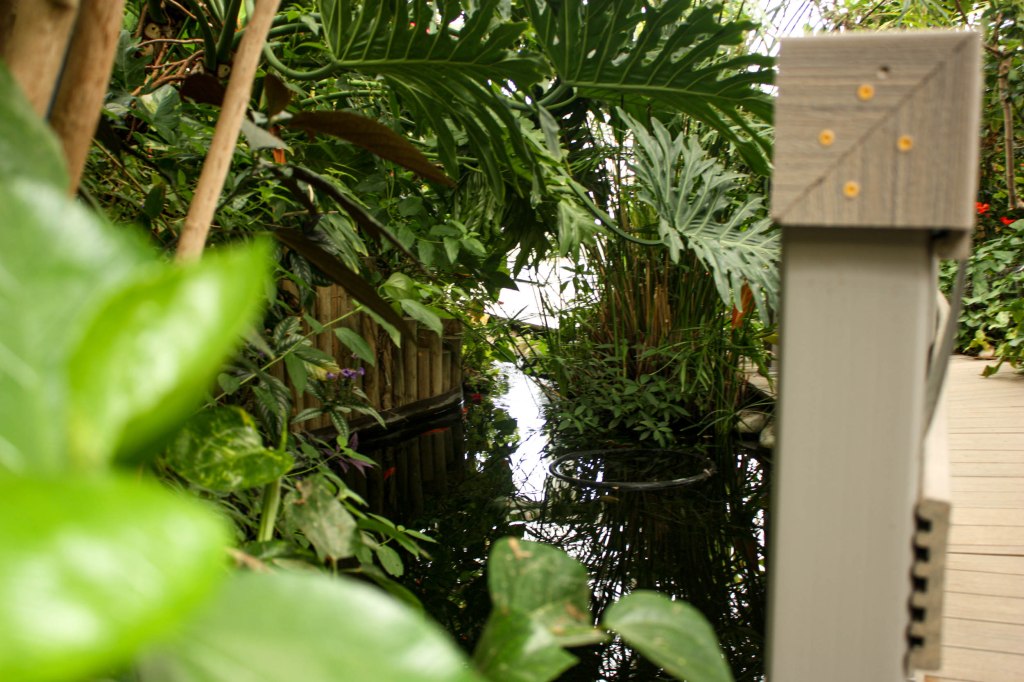
Inside of the greenhouse, two vibrant and tropical gardens can be found. The first is appropriately named The Rainforest. In this garden, visitors experience a humid and warm climate, surrounded by flora natural to tropical regions. According to the WCBG Visitor’s Guide, this includes many fruit trees and a bountiful collection of orchids, courtesy of the High Desert Orchid Society. The Rainforest also is home to fauna commonly found in tropical settings. Turtles and koi fish are found in the jungle of plants.
“The Rainforest has to be my favorite,” says Chandra Boulden, an employee at WCBG. “I am a beach girl, so the warmth of The Rainforest is nice in dry Grand Junction.”
After strolling through The Rainforest, visitors are led into The Butterfly House. This section is home to WCBG’s collection of butterflies. Originally housing only insects native to Colorado, WCBG has gotten clearance to house a wider variety of butterflies. Now, the collection boasts species native across North America. Once a month, there is a butterfly release that allows visitors to get a close look at the butterfly swarms. In addition to these fluttering creatures, a tortoise can be found roaming in The Butterfly House.

(Noah Turbyfill, April 12)
“I will never forget as a little girl going to see the butterflies,” says Morgan McNair, a Mesa County resident, when reminiscing on her trips to WCBG in grade school.
Outside, visitors will find a wide variety of plant life. Through a gate of greenery, visitors can experience The Ursula Hemmerich Memorial Rose Garden. Named after a local rose enthusiast, this garden is home to different types of roses. This space is a popular location for weddings, according to WCBG’s website. After touring the thorn-ridden blossoms of roses, visitors stroll to The Grass Garden.
Here, grasses local to the Grand Valley can be seen. Visitors can then explore the Western Heritage Garden where plants introduced by Native Americans and early settlers take root among antique farming tools. The Japanese Garden, also called The Shozan-en Garden displays native Colorado plants by using the Japanese tradition of Shozan-en. This practice highlights the harmony between man and nature, working together to display native flora.
Following an ornamental path, visitors walk into The Cactus Garden. Supported by the Chinle-Cactus & Succulent Society, this garden is home to outdoor cactuses and succulents. Behind this group of gardens, WCBG boasts a small amphitheater, Herb Garden, nature trail, and International Garden.
Admission to WCBG garden is $5 for adults, $4 for students, seniors, military, and children over 12, $3 for children between 3 and 11, and free for any child under the age of 3. This payment gives you access to all of the grounds.
If you frequent WCBG there is also an option for membership. WCBG participates in the Reciprocal Admission Program which provides admission to over 300 Botanical Gardens across the U.S. Instead of paying an admission fee for each visit, sign up for a membership to receive free entry and 10% off of WCBG gift shop items. Boulden says that there are multiple membership packages, depending on how many people are in your family or group.
Boulden says that spring and summer are the busiest times for the Gardens. In these seasons, field trips and family groups can be seen filing in and out of the lush pathways. In the winter, many retired folks find their way to WCBG to get some warmth and see some natural colors. The Gardens also cater to younger visitors. The Sensory Garden The Secret Garden, and the Castle allow play and exploration apart from the other more serene gardens.
As the summer season approaches, Boulden says that her number one tip for visiting the gardens is to visit in the mornings.
“A lot of times, groups come later during the hottest part of the day and end up missing The Rainforest because it gets so hot inside the greenhouse,” Boulden says. “The best way to experience all the gardens is in the morning.”
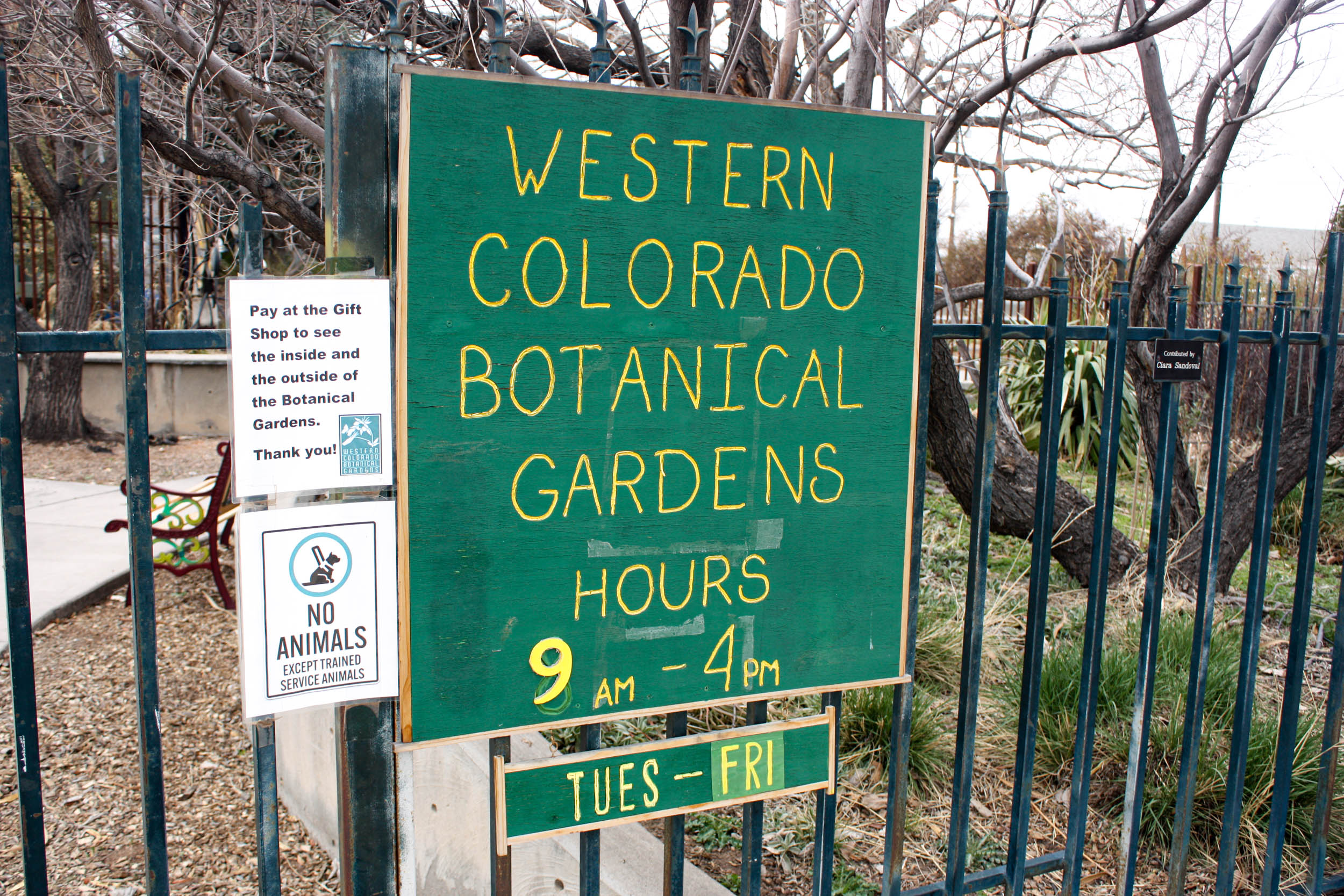
Western Colorado Botanical Gardens is currently open Tuesday through Friday from 9 a.m. to 4 p.m. and is located at 655 Struthers Ave, Grand Junction CO 81501.

 blockpartygj.net