
Story By: Grace Smith, Community Resources Editor
Photos By: Jillian Richardson
Nobody plans to run out of food without the funds to afford more, but that doesn’t change the fact that it can happen to anyone. In 2021, the United States Department of Agriculture found that 33.8 million Americans lived in a food-insecure household. Food insecurity is defined by the USDA as a lack of consistent access to enough food for every person in a household to live an active, healthy life. Food insecurity is present in 100% of U.S. counties and Mesa County is no exception, where Feeding America explains that the food insecurity rate is 12.1%. This means that there are around 18,910 people in the area who are uncertain of having or being able to acquire enough food to meet their needs.
Individuals and families can become food insecure due to many different circumstances, and Mesa County has an abundance of resources available for people struggling, whether the need is sudden or ongoing.
One resource in the community is the Food Bank of the Rockies. In 1998 the Western Slope branch of this organization began their mission to make sure every person in the 13 counties they serve have access to enough food. To make this possible, staff and volunteers work every day to organize and distribute food to pantries, hunger relief partners, and programs they have through the food bank.
“Our direct service is with our mobile pantries, and people can just show up. We don’t need to verify their ID or verify their income,” said Western Slope Food Bank of the Rockies Director Sue Ellen Rodwick. “People say they need the food and they can come.”
The Western Slope Food Bank of the Rockies has 18 mobile food pantries and works with over 145 hunger relief partners to ensure that everyone on the Western Slope has access to the food they need.
“Those partners can be everything from food pantries small or big, soup kitchens, homeless shelters, kids programs, anyone who is feeding people who need it,” said Rodwick.
Hunger relief partners can see what the food bank has in the warehouse and choose what they need at their program to have available for people. The food bank also assists these partners by helping to connect them to grocery rescue.
Grocery rescue is one of the ways that the food bank gets food for its own mobile pantries and other programs. They get items from grocery stores in the area, such as Walmart and Sam’s Club, that are past their sell-by date but still fine to eat. Upon receiving food from grocery rescue, volunteers go through these items to check the quality and ensure there is no damage to the packaging so that people can feel good about the food they are getting.
Food also comes from donations. They order their food in bulk to save on costs, and they try to get as much of their food locally as they can, including the locally-raised beef they had in stock this past week. Nutrition is a big part of their mission, so they also work to have fresh produce available.
“We don’t charge anyone for produce,” explained Rodwick. “We do the fundraising for that because that’s how strongly we believe in having nutritious food available.”
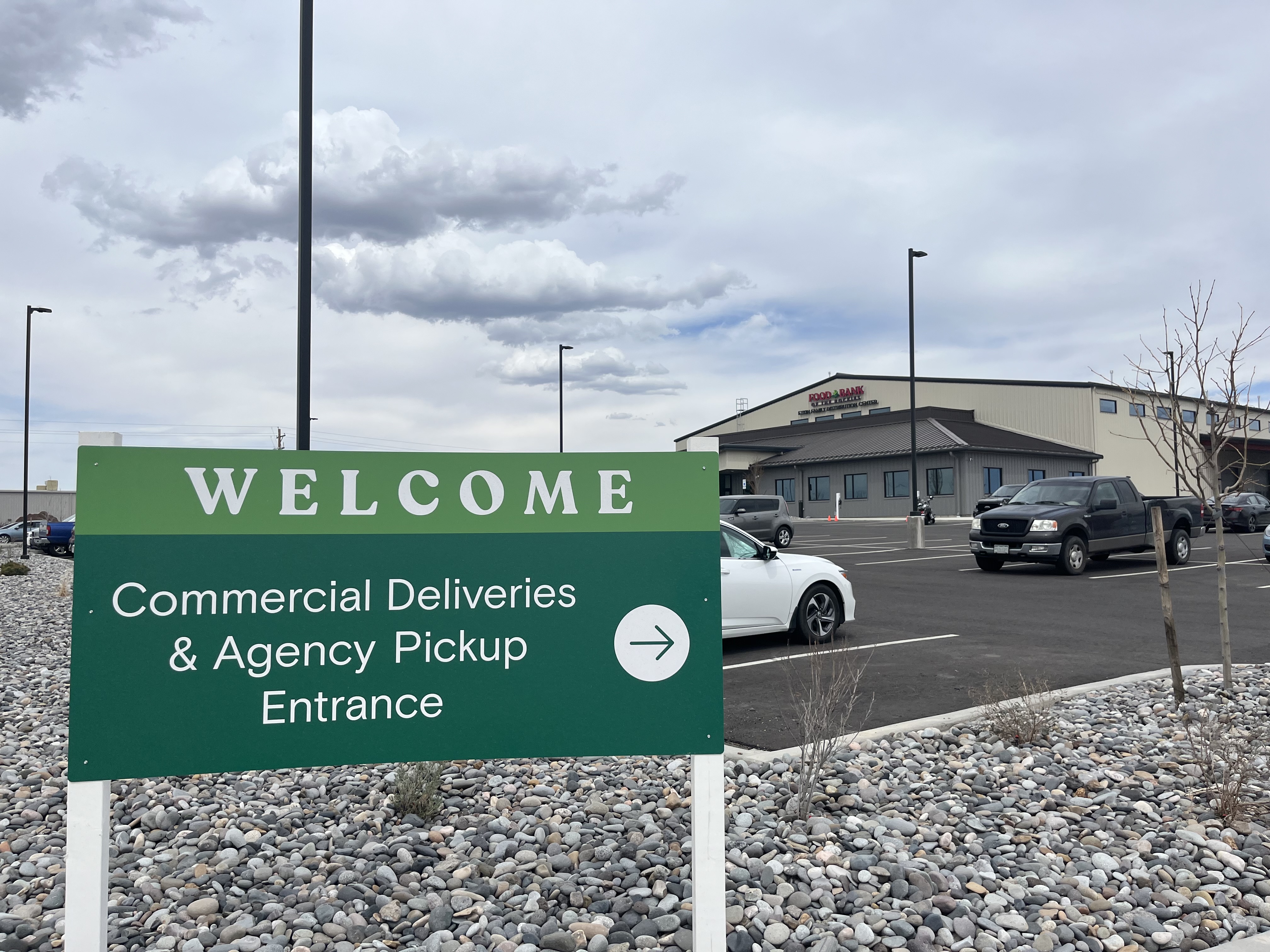
In November of 2022, the food bank moved into a new warehouse space called the Etkin Family Distribution Center with the Meals on Wheels program. Meals on Wheels promotes health and independence for the elderly in Mesa County by providing home-delivered lunchtime meals to homebound seniors. Those meals are also provided at nine different dining sites where seniors aged 60 and over can get a nutritious meal if they do not qualify for home delivery. In the new facility with the food bank, this program has a state-of-the-art kitchen where meals are produced to be delivered by volunteers.
In their new facility, they have a “clean room” where they can do things such as package produce and even dehydrate certain items. The program director at the food bank said they hope to be able to start using the clean room for dehydrating produce or fruit that is not used to make items that are still viable for people to eat in order to reduce waste.
The food bank is also an advocate for Supplemental Nutrition Assistance Program, a federally funded program that provides individuals and families that can be used at stores to purchase food. They have a bilingual SNAP representative that is contracted to help with enrollment in six of the counties that the food bank serves. This representative is able to go out to the mobile pantries to help people learn about SNAP and start the application process.
The food bank has other programs such as the Totes of Hope program that provides after-school and summer meals for kids, as well as Evergreen Boxes that are for older adults over 60.
The food bank is funded very heavily by donations. Every dollar donated is equal to three meals, and 96 cents out of every dollar goes to the actual food distribution People know that their donations are going toward the cause and only a small part of it is administration costs.
“We have lots of community members that are connected to a local hunger relief organization and we want them to continue supporting them, especially right now with inflation being so high,” said Rodwick. “Everyone is feeling that strain and we are seeing a lot more people seek food resources because that’s a way for people to stretch their budget.”

Community Food Bank, which is one of the hunger relief partners of Food Bank of the Rockies, is another resource available for people in Mesa County facing food insecurity. They bought their facility in Grand Junction in 2020 after renting out different facilities since they began in 1978. The permanence of this 10,000-square-foot space is helpful to the program and people seeking food assistance.
“We welcome anyone in the community, anyone that’s in Mesa County, or if you just happen to be in Mesa County that day, that’s really enough,” said the Bilingual Resource Navigator at Community Food Bank Carly Luebber.
“If you show up and you need food, you’re going to get food,” said Luebber.
They are open to the public on Mondays, Tuesdays and Thursdays from 12:30 to 5:30 p.m. No ID is required, all you have to do is fill out an intake form that asks for a name, birth date and address.

Anyone can come to the food bank and receive food up to one time per week. The food bank recommends 24 visits a year for people who need to make use of the food bank regularly, which is about two times a month. However, many people in Mesa County do not need the assistance regularly or may have never needed it before.
“Many people just need us in a period of crisis, so with that in mind anyone in the community can come through up to one time a week to go shop through the pantry and take what’s useful to them.”
In addition to their in-person service, they also offer home deliveries for those who have a transportation barrier in getting to the food pantry.
“As things get tight, suddenly you’re trying to decide if you can afford the gas to get to the food pantry.”
They offer Thursday and Friday deliveries by appointment and have recently started doing urgent deliveries Tuesdays and Wednesdays. This service is for people who didn’t know about the food bank or didn’t have the opportunity to go to the pantry before they ran out of food completely.
There is also a proxy option at the food bank, so if you cannot find time to go to the pantry you can send someone in your place to get your food for you.
Community Food Bank utilizes grocery rescue to source some of their food as well.
“Some days it’s 2000 pounds of food, some days it’s 500 pounds of food, but that’s all thousands of pounds of food when multiplied by multiple organizations that otherwise would end up in the trash that’s perfectly good,” said Luebber about the food they get from grocery rescue.
The food bank is also an advocate for nutrition, and they offer assistance in helping people with nutrition. They try to create recipes using items they have at the food bank for people to be able to use, especially if there is an unfamiliar item that people may not know how to use or cook.
“It’s fun to get to do some nutrition tastings, create recipes, and just encourage people to eat nutritionally balanced food,” said Luebber.
Part of Luebbers job is helping to make people aware of other resources in Mesa County that are available. While people are waiting for their turn in the food pantry, she connects them to resources they may be able to utilize which assist with housing, clothing, pets and more. Community Food Bank also offers assistance connecting people to SNAP and completing their applications.
“For many people, there is a stigma just trying to access these resources, and that is the last thing we want,” said Luebber. “If someone comes in and they’re feeling apprehensive, I try to make them feel welcome, tell them what to expect, and let them know that we set this up with their dignity in mind so that they aren’t just getting a box that’s filled with cans, but truly that they will be shopping for food.”
If you or anyone you know is struggling, the 2-1-1 number which is a Colorado-wide free number that anyone can call to figure out what resources are available. You can call the number and it connects you with someone in the community who can connect you with resources, whether it be for food or other needs.

 blockpartygj.net