
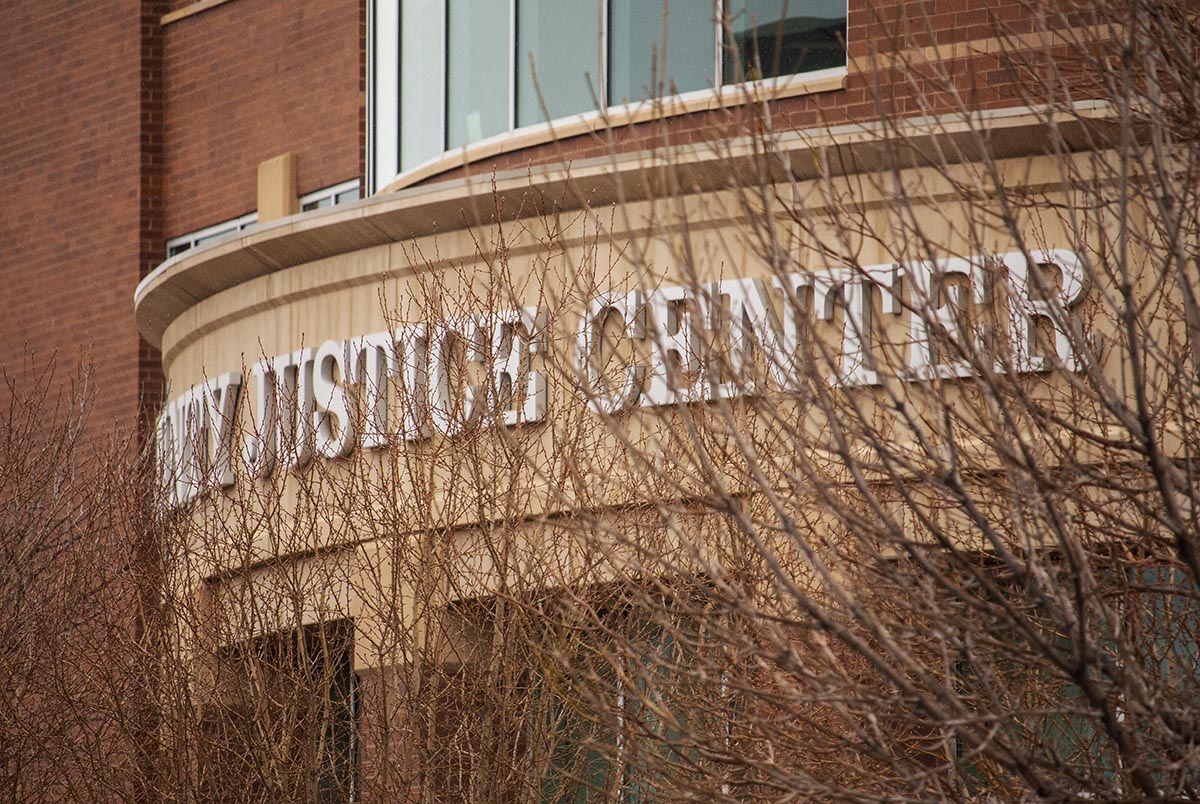
The disconnect between local perception and our crime statistics.
IAN GOLBA – FOOD AND BEVERAGE EDITOR
Earlier this year, the National Council for Home Safety and Security released a report showing that Grand Junction was ranked as the number one least safe cities in Colorado. In this same study, it was found that Fruita ranks 18 on a list of 50. But do these stats paint a fair perception of Grand Junction?
In the annual study, cities were ranked based on their average (per 100,000 people) violent crime and property crime rates for the previous year. All of the information used was acquired through the FBI’s Uniform Crime Report available to the public. Police departments across the United States submit their annual crime reports to the FBI to aid in the council’s 91-year-old program.
To further understand the reasoning behind this trend, multiple attempts were made to contact the Grand Junction Police Department to provide insight. Although contact was made, information received did not match what had been reported to the FBI. When asked why Grand Junction continues to have a higher violent crime rating than Fruita or Palisade, Heidi Davidson, Police Information Coordinator for the GJPD answered.
“Grand Junction is significantly larger than Fruita or Palisade, so they are not comparable communities,” she said. “It would be like comparing Grand Junction’s crime stats to Denver.”
However, statistics produced by the Uniform Crime Report are based on averages of crimes per 100,000 people. This is done to all cities regardless of population or geographic size to even out the numbers and make them comparable. Although Davidson explained that there could be differences in how separate agencies report their crimes to the FBI, at the GJ PD, every offense is reported as a crime.
“That means that if someone breaks into your garage, assaults you, and then steals your car, we would report three offenses for that report; burglary, assault, and auto theft. Other agencies in Colorado only report the single most serious offense for each report… we would report three crimes, where others agencies would only report one.”
Though regardless of our increased crime rate, residents seem to have a completely different view of what Grand Junction is.
“I’ve never had a time where I felt unsafe really,” said Anne Temple, a CMU Biology student who has lived in and around Grand Junction most of her life. When asked if she felt safe in Grand Junction.
“It’s kind of small… it’s a good place to learn how to drive because of all the back roads… There’s been a lot of diversity coming into Junction,” she said.” We’ve gotten a lot more culturally and ethnically inclusive of other people.”
Though this perception isn’t just with the younger population. A local mother of two, who asked to remain anonymous, commented on the availability of good places to live in Grand Junction.
“There are some really pretty places in town and [a lot] of good neighborhoods,” she said. “There are a couple trailer park type of place… I’ve heard stories of not so great things happening in trailer parks in Grand Junction.”
Even though residents do have a sense of security, there is a trend of caution and awareness around the statistics Grand Junction is known for. Taylor Cole has lived in the Valley for over a decade and attended local schools, felt people should have some knowledge before starting a family here. From her perspective, there isn’t very much for kids to do in town, and so she has seen teens turn to drugs, although she feels the rates in Grand Junction are lower than a bigger city, like New York City.
“If we have more outdoor family activities, I think that would maintain the outdoorsy feel of the town, but I think that would give people more to do than get themselves in trouble,” she said. “Like when the farmers market comes around.”
Here in Grand Junction and across the Grand Valley, there remains a very positive and supportive feeling toward our law enforcement. When asked to describe the public’s opinion of the GJPD, she expressed gratitude for the people of Grand Junction.
“We serve an incredibly supportive community,” she said.
Though there still may be something that citizens can do to foster a more appropriate perception of Grand Junction and curb our continually rising crime rates, such as stepping in when you think something going on is not good.
“Stop being internationally ignorant when they see crime happening,” she said.
Image courtesy of http://www.nnw.org.
Many neighborhoods around Grand Junction have registered for the National Neighborhood Watch (NNW) program. In essence, this is an agreement between members of a specified neighborhood to individually be vigilant and report anything out of the ordinary to either a determined law enforcement officer or the non-emergency and/or 911 depending on the severity of the situation. This could very well be a simple change that communities can make that can drastically change how safe an area is perceived. In 2008 an analysis was done to uncover the effectiveness of the NNW by observing 36 neighborhoods who had recently adopted the program. 53% of the communities saw a reduction in crime of 9% or more.
For more information about the National Neighborhood Watch or to register a neighborhood go to https://www.nnw.org/or contact your HOA to get more involved in making your community safe.

 blockpartygj.net