
By MATT KENNEDY
Things that may have appeared obscure or eccentric a month ago, now are considered the new norm. Having to wear a mask over your face to the grocery store is now recommended and asking a friend if it is okay to give them a high five is considered the more polite thing to do.
For churches, online services and social media presence have become the primary way to reach members.
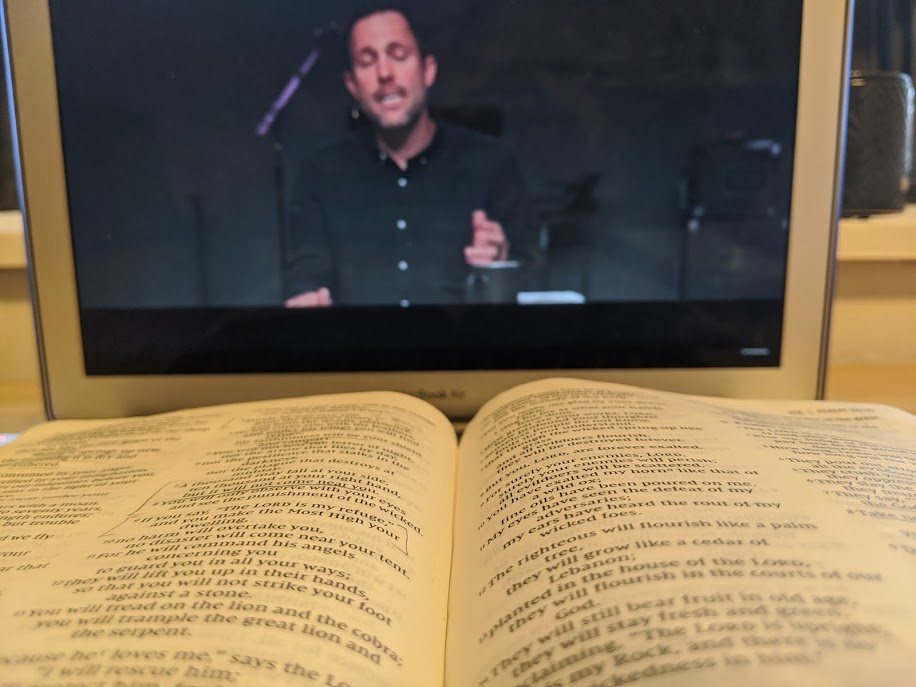
Northeast Christian Church, which is located off Patterson near N 12th Street, normally has three services on a typical Sunday morning. However, Lead Pastor Seth Thomas has had to get used to preaching his sermons from in front of a camera. The church films one service prior to Sunday and then plays it at the normal times so the church members can still “attend” at their routine hours.
One positive to take away from the drastic changes–the online presence of the church has increased exponentially.
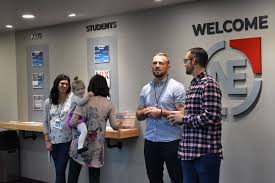
“It has definitely accelerated,” Thomas said. “In the past we have recorded the teaching portion of our Sunday service and then made that available online on ourwebsite after the fact through Youtube. But this has pushed us to pre-record a full service with music, time of communion, a welcome and also kind of a giving moment, as well as our teaching time.”
Switching to an all-online presence presents enough challenges on its own; however, during the most eventful weeks in the church calendar, the job as a pastor has been tested to try and keep members engaged despite not being able to meet in person.
“It’s been interesting,” Thomas said.“We’re doing our best to be talking about these three things: Community, serving ministry and evangelism. We’ve done our best to create community whether that is on Facebook, or through email or brief videos that we are releasing. Phone calls, text and group messages – we divide up people in our church with our staff in the teams that they’re leading. We are trying to maintain relationships, community and communication the best we can.”
Now the question is, has the online presence of the church mixed with the ‘convenience’ of quarantine allowed for growth in viewership and engagement for the Sunday services?
“That’s kind of a difficult question for us to answer right now,” Thomas said. “The only way we can track analytics is by device connection.”
That means how many devices are connected to the church’s platform during any given service and then how many devices were connected at the same time. Those numbers are then multiplied by a certain number close to two (assuming two people are per device) to determine the overall attendance rate for a service.
Since moving online, Northeast’s attendance rate has been up about 10 percent. Given that this Sunday is Easter, that number is projected to go up due to the national average church attendance rising significantly for Easter Sunday. According to Pew Forum, on average, 31 percent of Americans go to church services on a weekly basis. However, on Easter, 49 percent of Americans attend a church service.
This year may see an even greater increase in the normal attendance rate due to almost everyone in the country being in their homes.
“I would sure hope so,” Thomas said. “Even in the midst of this people are still making time and plan to watch. Now that is basically gonna be your only option. I don’t know if other churches in our valley, but I am aware of other churches around the state that are doing the drive-in service type of thing…it would [still] be a great joy to see our viewers numbers double or whatever or this Sunday’s services.
Just a few weeks ago, drive-in services would have been considered obscure and eccentric; however, major churches like Bethel Church in Indiana and Denver Baptist Church have been hosting drive-in services and worship sessions to accommodate the social distancing mandates many states of implemented during the COVID-19 pandemic
Pastor Thomas said that Northeast Church was considering that format for their Easter service, but the short time turnover prevented them from doing so.
According to the same stats from Pew Forum, church attendance in the United States has decreased over the last two decades. Maybe a change in platform and accessibility will start to show an increase because of the switch to online services. As of now, the numbers have not been recorded by a lot of churches because the change is so recent.

 blockpartygj.net