
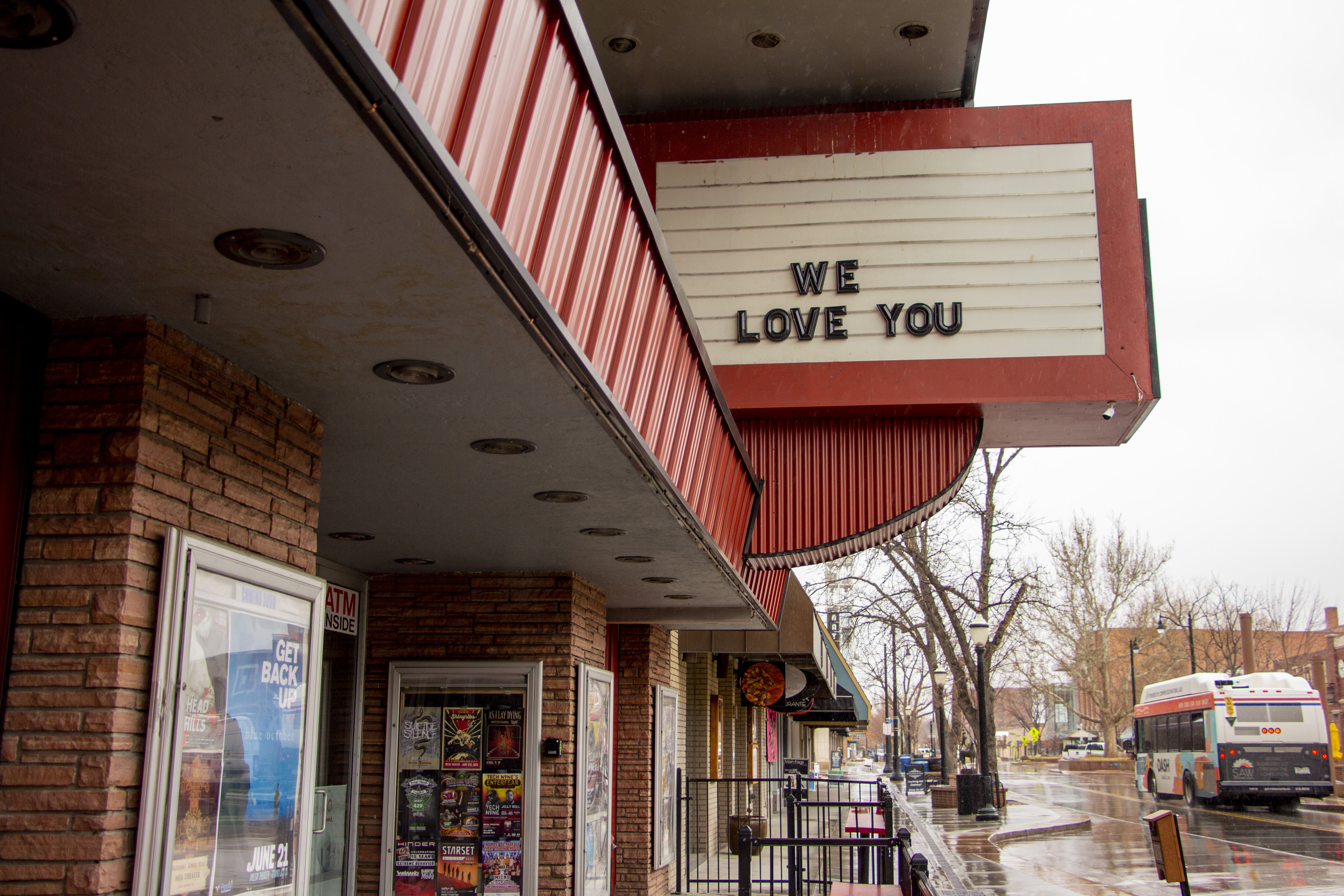
Honey, switch to the news. There’s a pandemic on.
Jacob Penick – people Editor
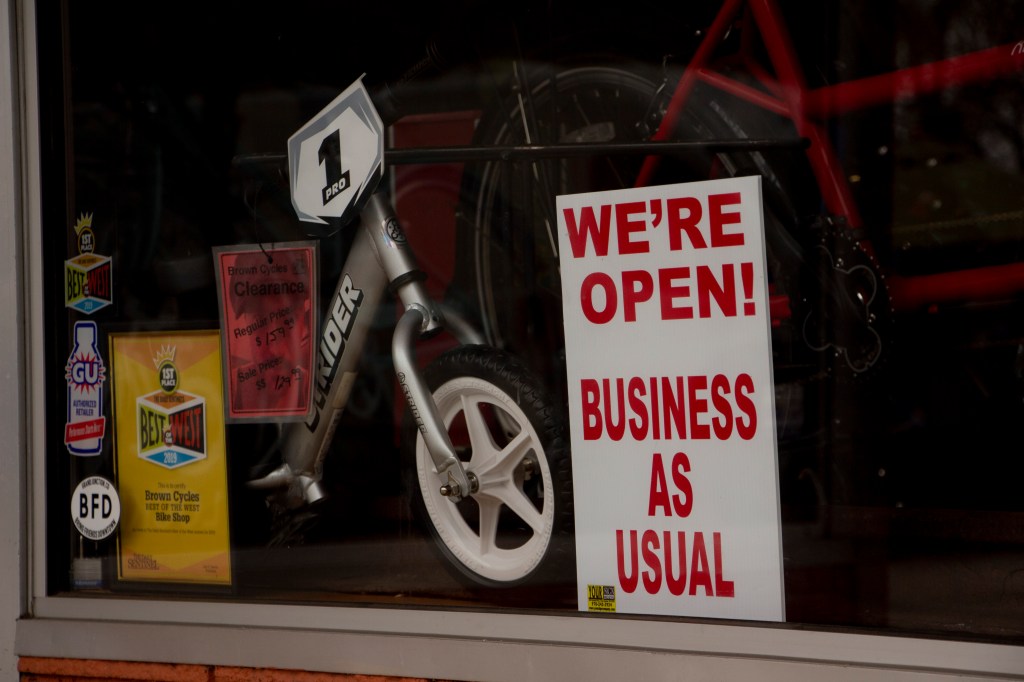
Although if you’ve been out and about in Grand Junction in the last couple weeks, you might not know it. Streets are busy. People sit around tables and talk. Parking lots are full. Even though the people of Grand Junction continue to live somewhat normally, our local businesses are less fortunate. Dark windows line Main Street; a stark contrast from Aprils of years past when Spring air drew us all out to support our local haunts.
The response from local businesses has been all over the place. Some have been compliant, some have been resistant, and some have employed unique strategies to cut costs. Economic downturn and all that. We’ve been launched into a period of penny pinching, which has caused tensions our communities haven’t seen since World War II.
March 16 – Colorado Governor Jared Polis orders the closure of restaurants, bars, theaters, casinos, gyms, breweries, and coffeehouses. Restaurants may still offer delivery and pick-up services.

Gelato Junction is empty. The front doors are unlocked, but no employees occupy the front of the shop. Chairs are upturned on tables. The General Manager, Karen, comes up from the back to greet whoever made the door chime go off. Karen is allowing customers in to pick up over-the-phone orders – no walk-ins. Karen’s super chipper! Her smile is off the charts, the Gelato Junction service we’ve grown to love.
Even then, Karen is extremely aware of the gravity of the day. Her business is limited, but she knows this isn’t the worst blow. A shelter-in-place order is on the horizon.
“We’d…probably just lose most of our employees,” said Karen. “They’d have to find new jobs. It would just be a really big setback for all small businesses.”
Gelato Junction would not be considered “essential” under a shelter-in-place order and would have to close completely. Being a small business, they are not in any sort of place to give employees paid leave. Or even any leave. Furlough at best.
March 19 – Polis bans any gatherings of 10 or more people. Schools are required to transition to distance learning. Small businesses across the state qualify for a major disaster relief loan of up to $2,000,000.
Summit Canyon Mountaineering’s doors are wide open. A couple customers browse while four employees stand behind desks and restock shelves. There are no signs warning customers to keep their distance from each other. Nothing to limit the number of customers in the shop at once.
General Manager Nick’s voice carries throughout the shop. Emphatic and excited, he points out the advantage local retail holds over chain locations during the pandemic. “With other businesses closed like REI, we’re doing a little bit better than we would have thought we would right now,” Nick said.
Because of the recommendations of the federal government to exercise social distancing, many nationwide retail chains, especially in the recreation sector, closed their doors. For Nick, this is an opportunity to grow his business.
Summit Canyon, while flourishing, is doing everything they can to be sure they are operating responsibly and cleanly. Nick is taking sanitation seriously. In reference to Polis’s orders to limit public gatherings, Nick is watchful.
“We don’t really get more than ten customers in here at a time, so we’re not too worried about it,” he said. “If we had a huge group of people we’d probably do something about it, but we’ve been about five, six people max at a time right now.”
Like Karen, Nick pretty much expects shelter-in-place to be ordered at some point in the near future.
“It would drastically affect us,” he said. “We might have to lay some people off and stuff like that, which would be horrible.”
Nick is aware of the disaster relief loans his business would be eligible for but isn’t sure of the math behind it or if it would be viable for his business.
March 22 – Polis orders businesses to reduce workforce to 50% of normal.

A Robin’s Nest is dark. But not closed. Manager Shane sits behind his desk, illuminated only by a desk lamp. Shane’s antique emporium is huge and requires a ton of electricity to keep it lit.
“We’re trying to cut costs wherever we can, so we asked employees to take time off and we cut our lighting back to about one third of what we normally have,” Shane said. He’s level-headed. Matter of fact. A customer walks in and Shane asks them if they’d like the lights turned up while they browse.
Business is hurting, and Shane has done the math.
“Because of the panic, we’re down to about 20% of what we normally are in sales,” he said. “It’s an 80% reduction in sales. But, we’re still open, and we’re gonna be here until they make us close.”
The idea of a shelter-in-place order was brought up.
“Oh we’d have to close and do what we have to do,” Shane said. “How would we pull through that? I don’t know. I predict…forty to fifty percent of the businesses just downtown will be closed when this is all said and done.”
He hopes the government would be able to support local businesses financially in the sort of a scenario.
March 25 – At approximately 5:00pm, Polis announces a two-week stay-at-home order to begin the next morning at 6:00am.

 blockpartygj.net